Water as a Source of Community – Artistic Residencies 2025 – residências artísticas 2025
Catalogue - Marca D'água
Water as a Source of Community – Artistic Residencies 2025 Programme promoted and organised by RAMA – Residências Artísticas, with the support of the Torres Vedras Municipal Council. The programme awards three artistic creation grants rooted in a local context to three national or international artists who live or work in the Oeste region, specifically within the municipalities of Torres Vedras, Alcobaça, Alenquer, Arruda dos Vinhos, Bombarral, Cadaval, Caldas da Rainha, Lourinhã, Nazaré, Óbidos, Peniche, and Sobral de Monte Agraço.
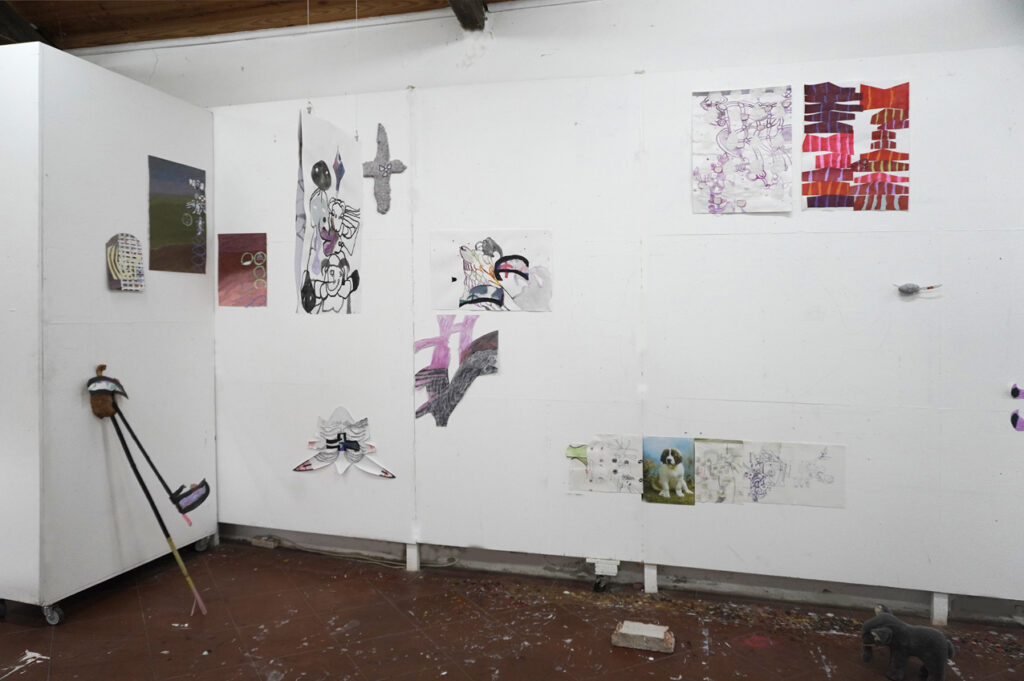
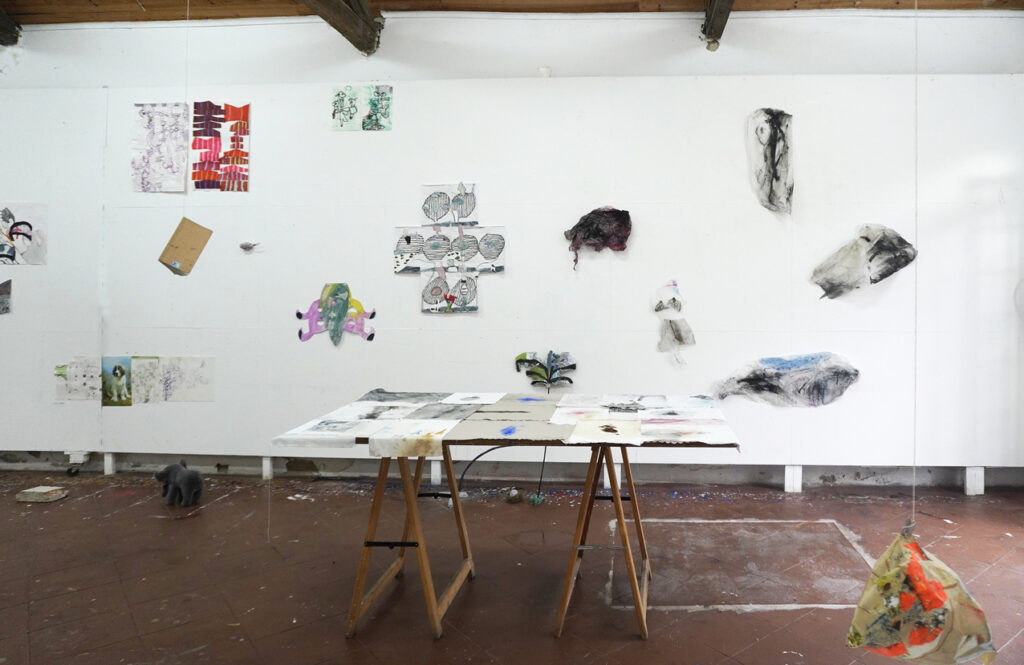
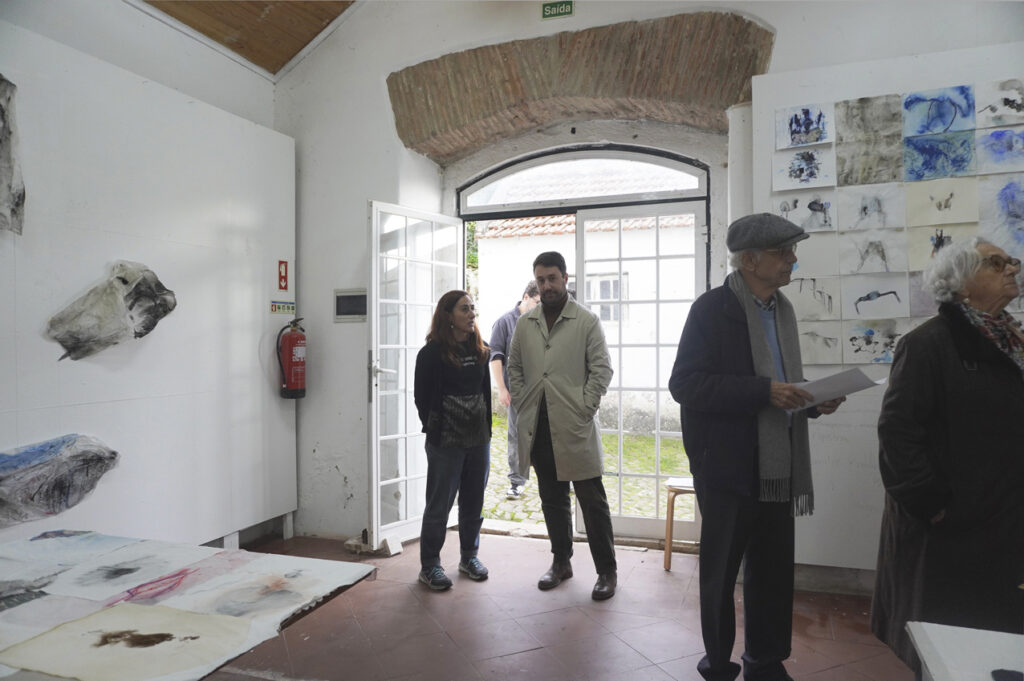
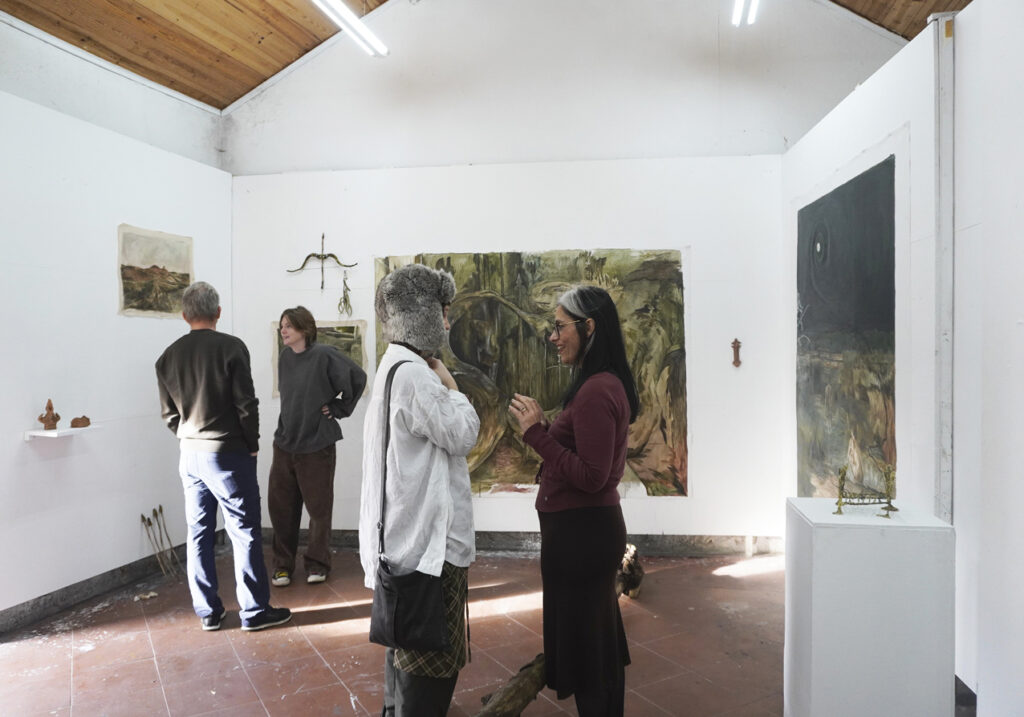
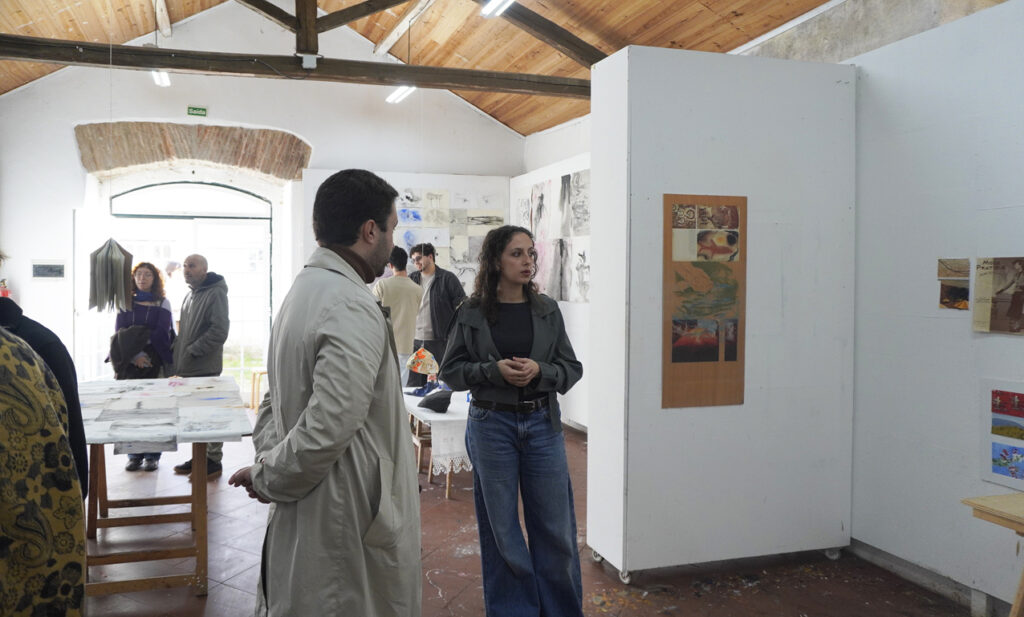
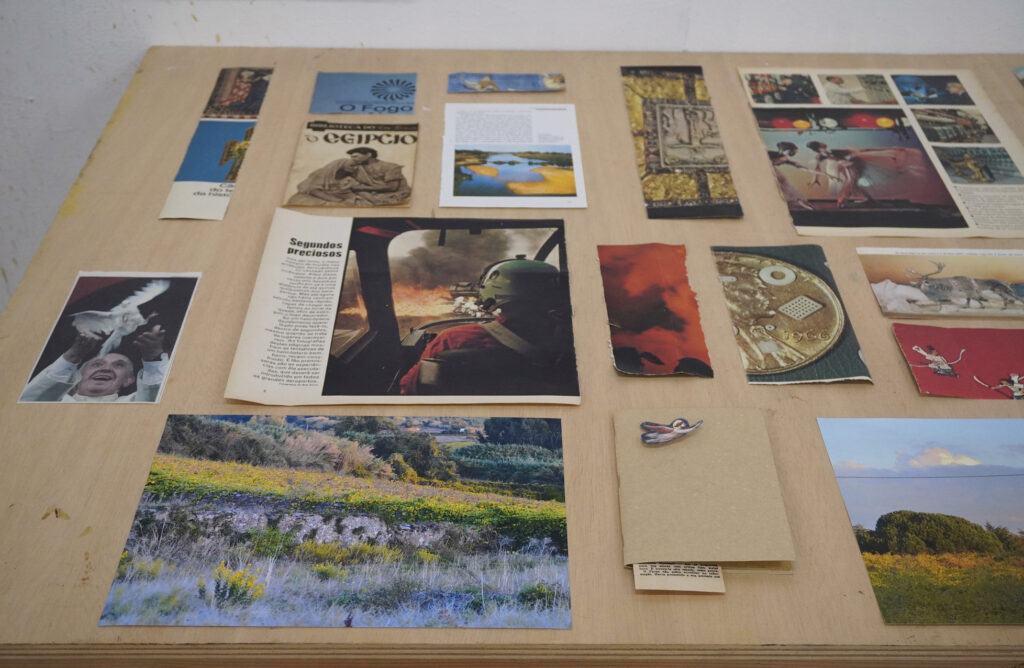
The grants include accommodation, studio space and mentoring, financial support for the development of the projects, curatorial guidance, and the presentation of the works through an exhibition held at the RAMA Studios and in public washhouses within the surrounding territory, as well as the publication of a bilingual online catalogue.
Grant Holders / Resident Artists: Alice Serrazina, Leonor Guerreiro Queiroz, Sara Dionísio.
Participating Artists: Alice Serrazina, Leonor Guerreiro Queiroz, Sara Dionísio, Nicole Manning.
The Artistic Residency took place from 3 October to 10 December 2025, under the mentorship of curator Ana Anacleto, artist Paulo Brighenti, and invited artist Maja Esher.
The two-month Artistic Residency unfolded in a rural context within the villages of Alfeiria and Maceira, in the municipality of Torres Vedras. Conceived as an immersive and collaborative environment, the residency foregrounded the empowerment of artists and the construction of cultural memory through peer exchange, the intersection of artistic practices and languages, and sustained engagement with the local community, regional heritage, and traditions.
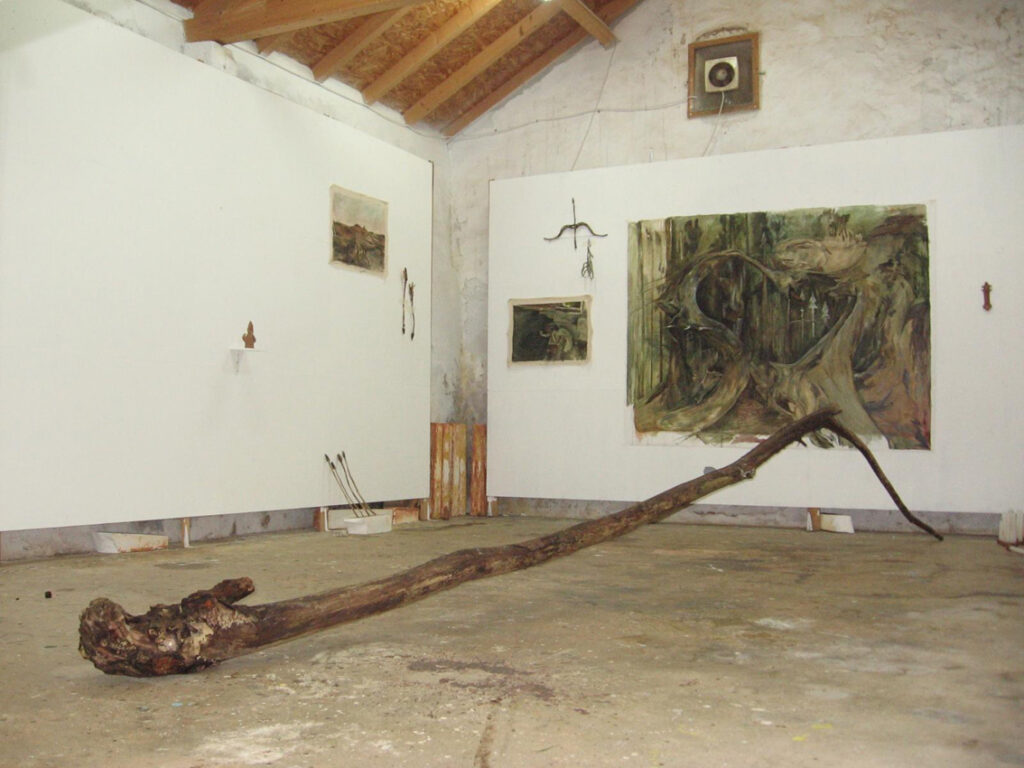
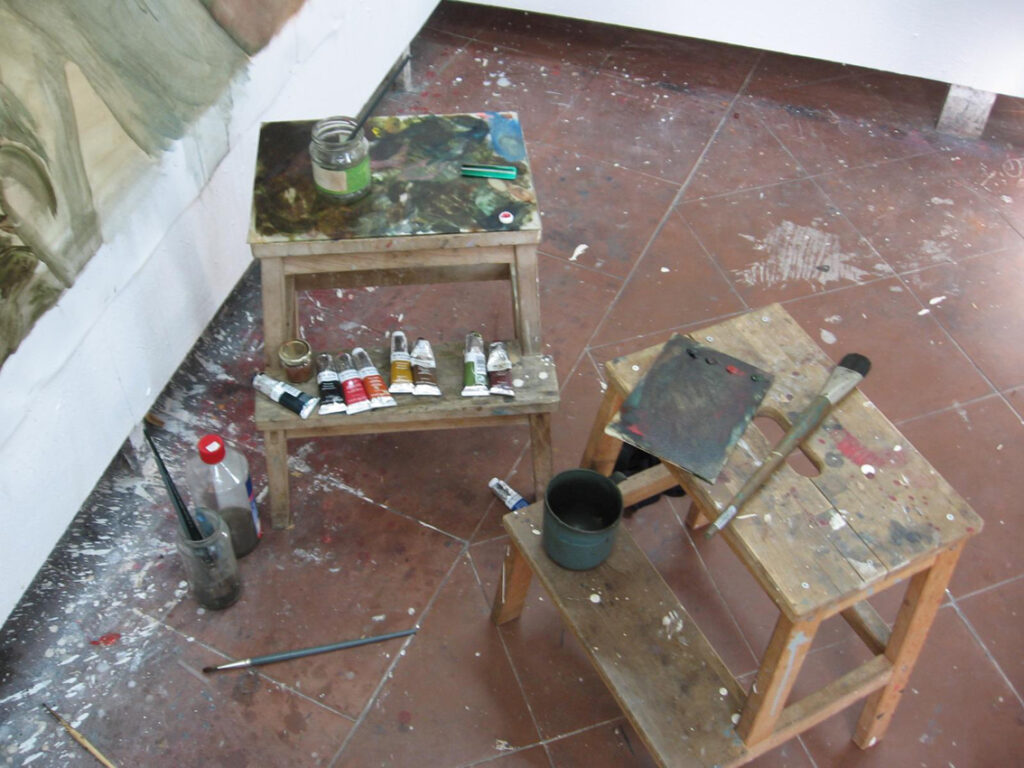
Curator Ana Anacleto. RAMA Studios – Artistic Residencies the village of Maceira, Torres Vedras
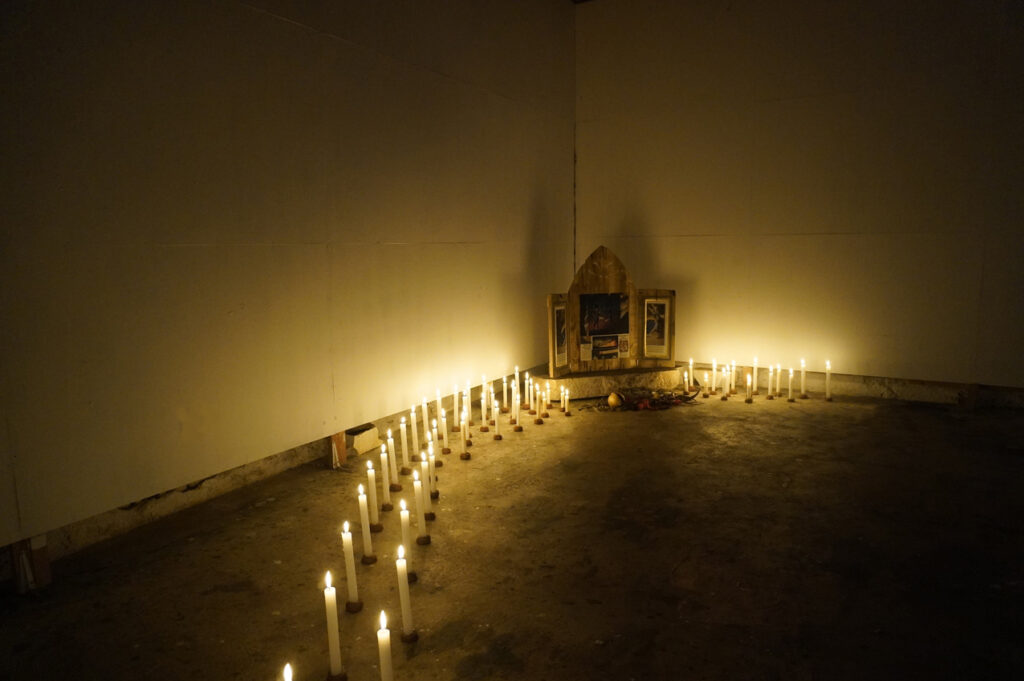
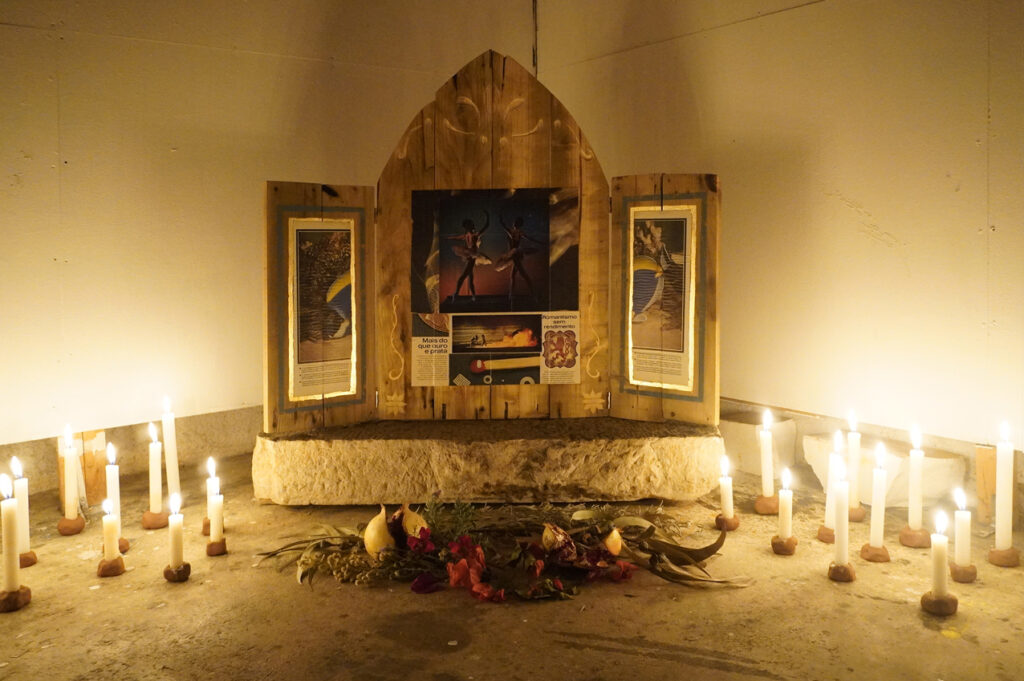
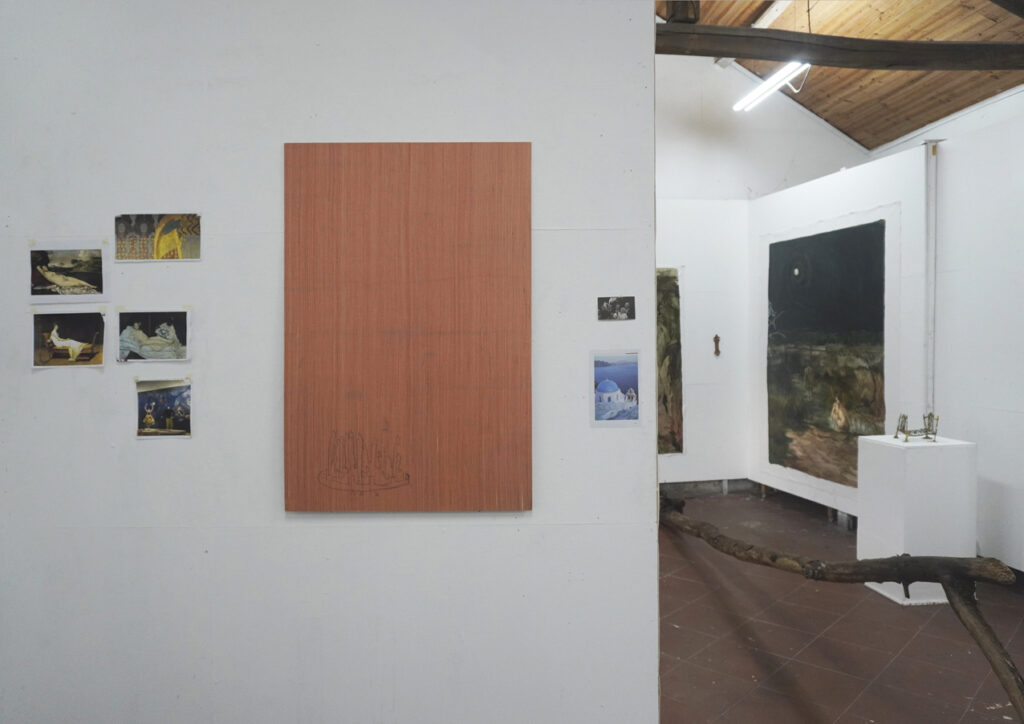
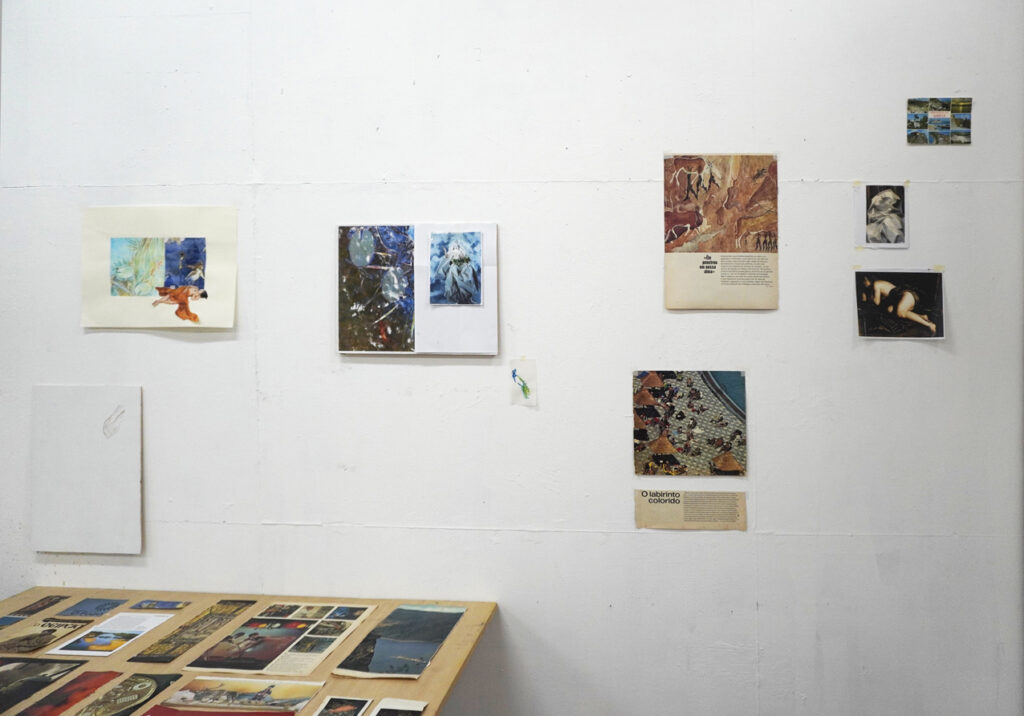
Exhibition Text – Marca D’água
Marca d’água
Alice Serrazina, Leonor Guerreiro Queiroz, Nicole Manning e Sara Dionísio
We are all bodies of water.1
On every surface there is a trace.
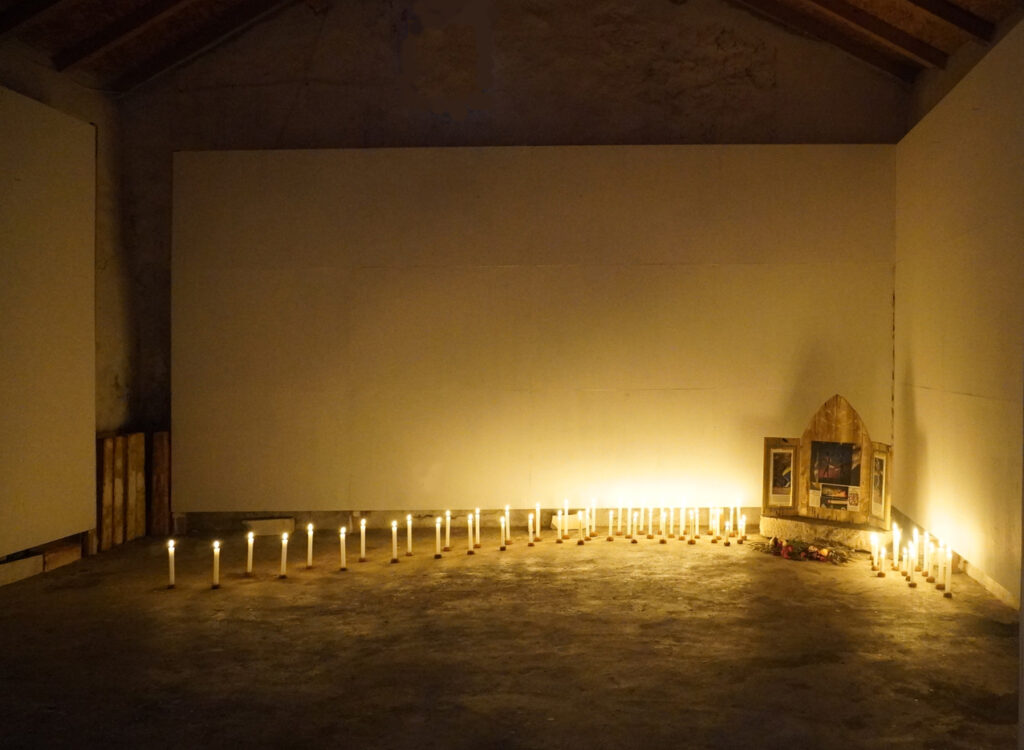
Some traces are visible, others require light, proximity or silence to emerge.
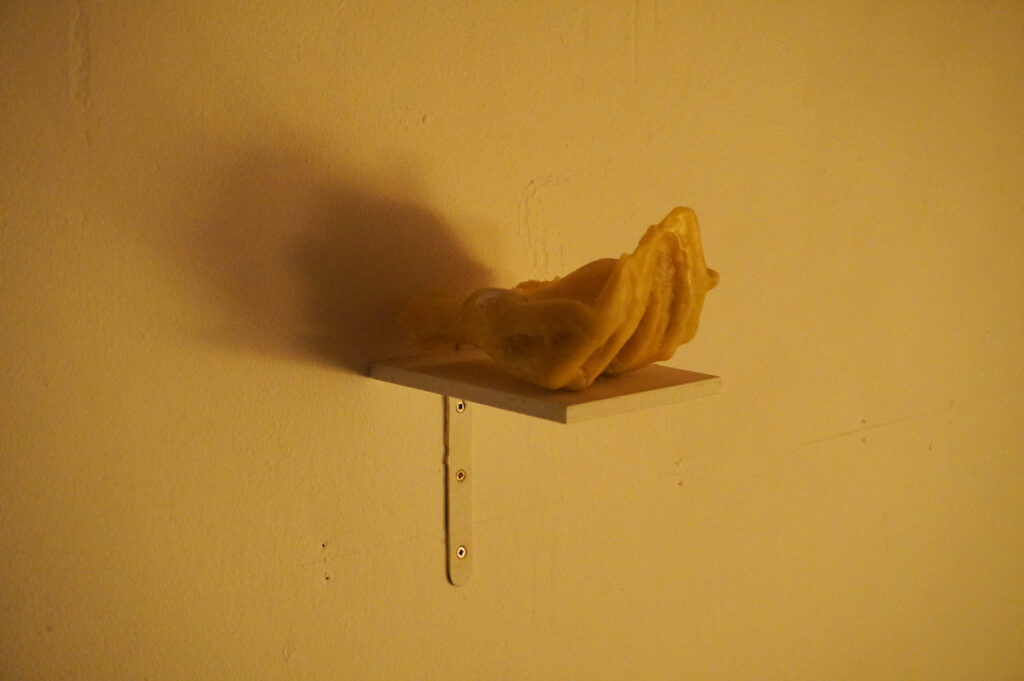
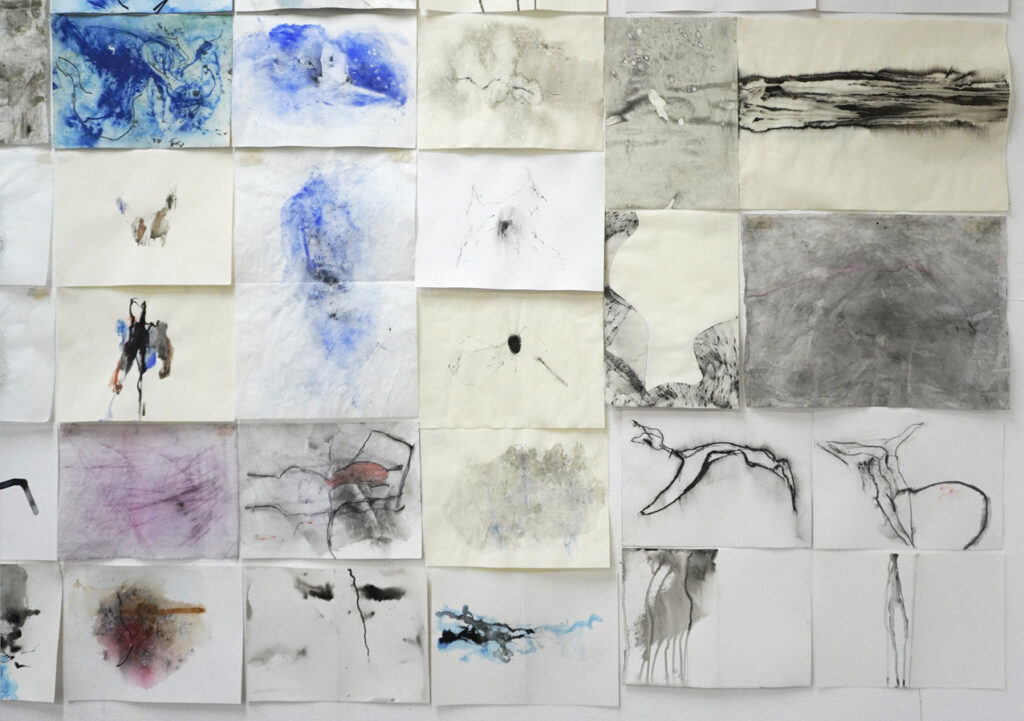
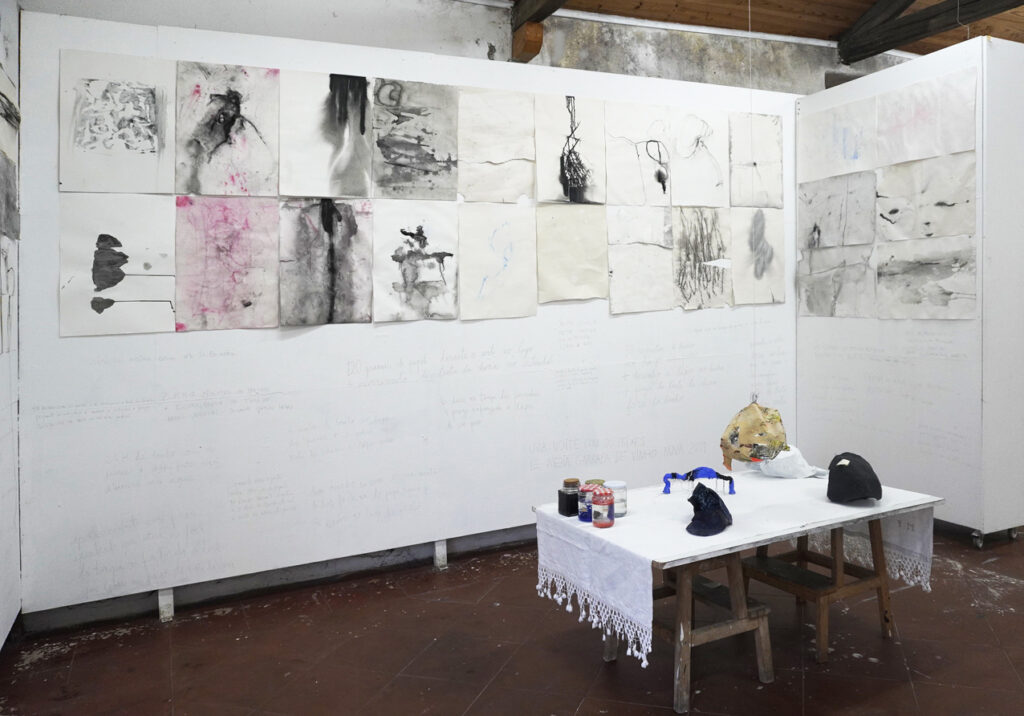
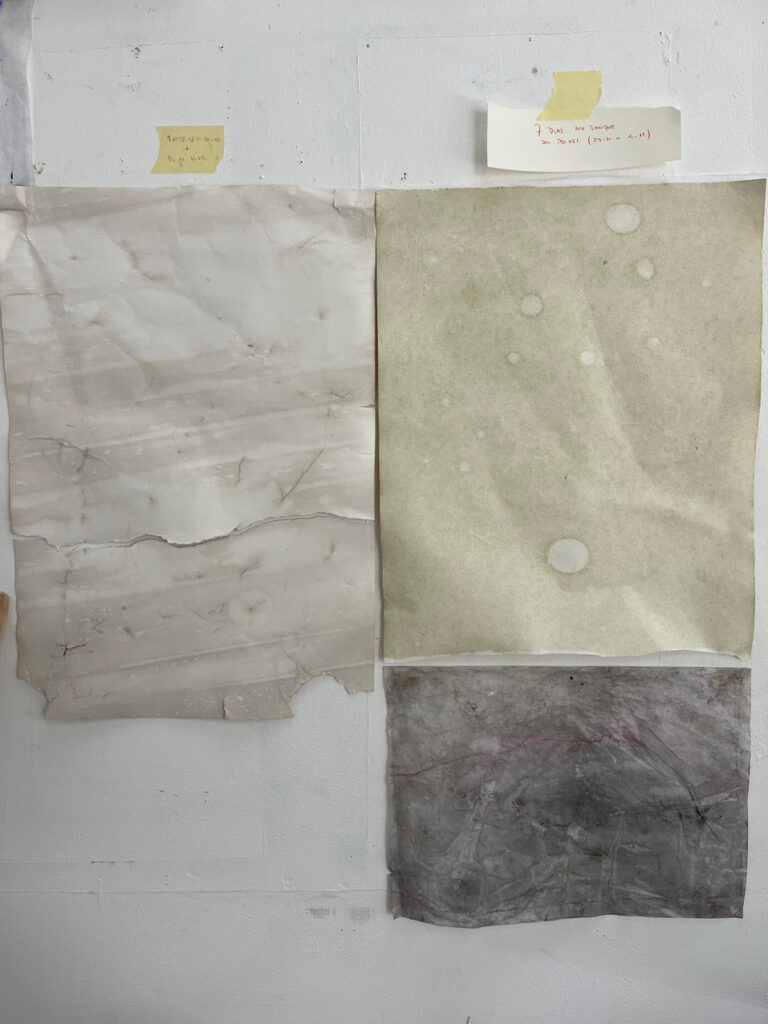
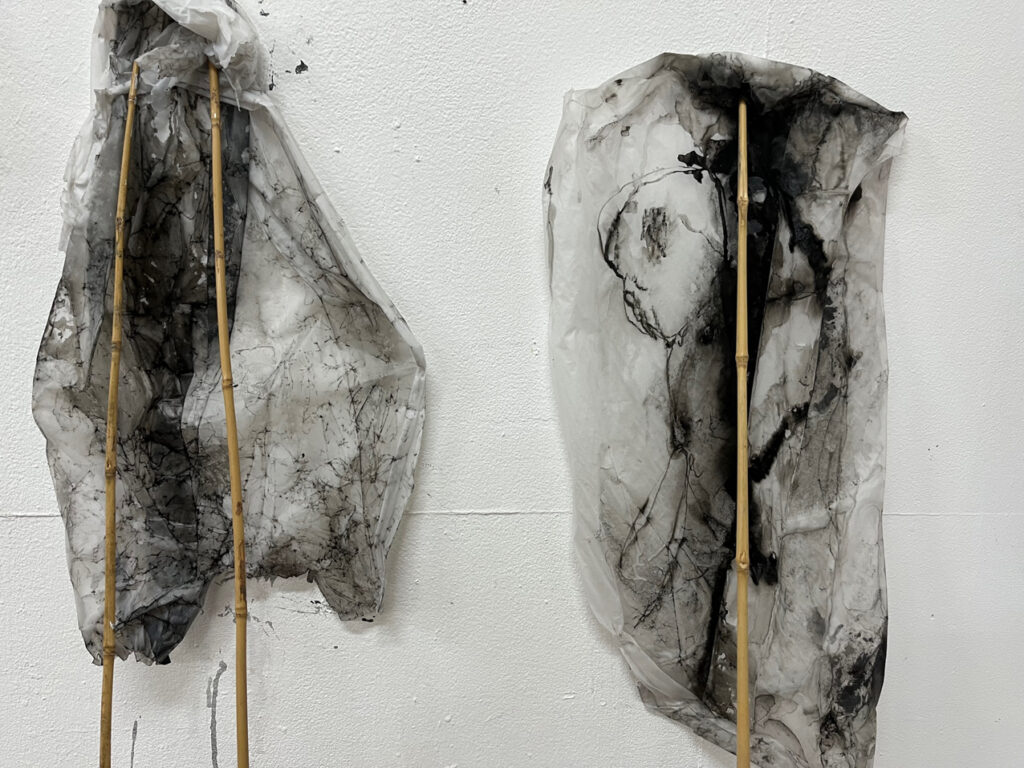
The watermark – which we collectively chose to title this exhibition – defines a discreet, almost secret impression, revealing what sustains the image without imposing itself on it. It is presence and absence at the same time. It is what remains when everything else evaporates: it is an almost invisible signature, a memory on paper, the echo of a passage.
Astrida Neimanis has been defending the idea that water is a living element that carries memory. In her research practice based on the "feel-ed work" method, she has been working on the relationships between the natural environment of water, human manipulations and actions upon it, and the shared territories between the places of water, the places of bodies and their multiple actions and contaminatio
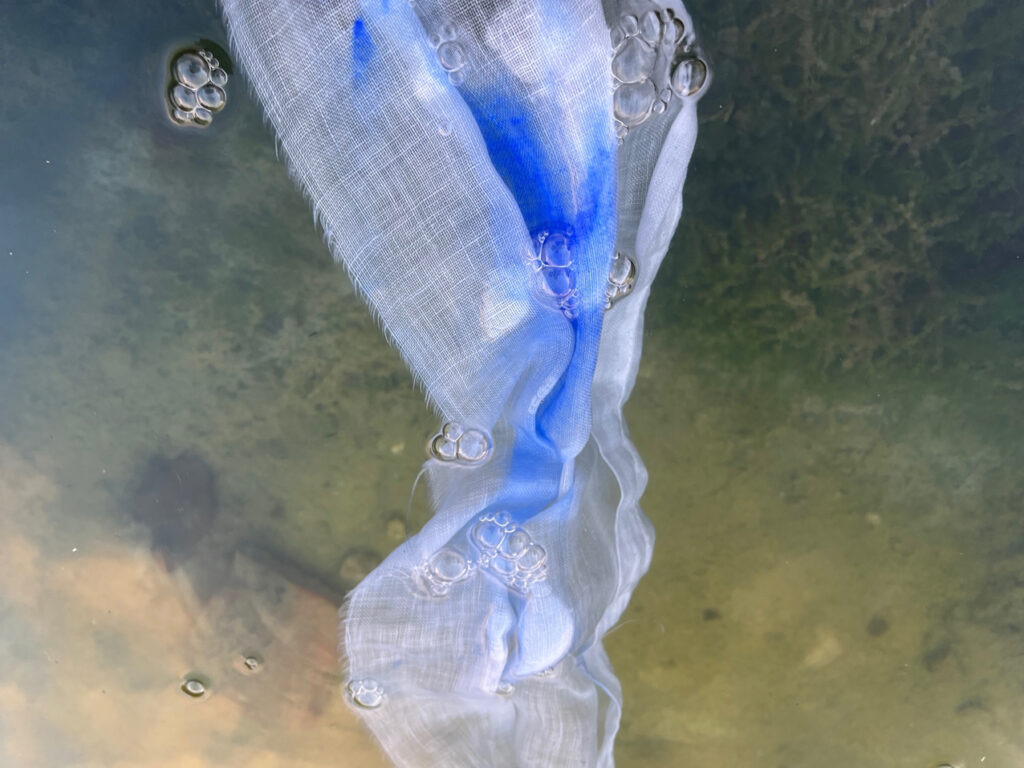
Water, as a symbolic element, is seen as an engine of transformation: it dissolves, engraves, transports. In its perpetual movement (whether in flowing dilution or in mutation between its various physical states), it blurs the boundaries between the permanent and the ephemeral, creating landscapes that are simultaneously internal and external, more visible or profoundly invisible.
It has the power to act as living memory, matter and metaphor, reminding us that our bodies, as well as our personal narratives, are composed of flows: of time, of memory, of desire, of pain, of resistance.
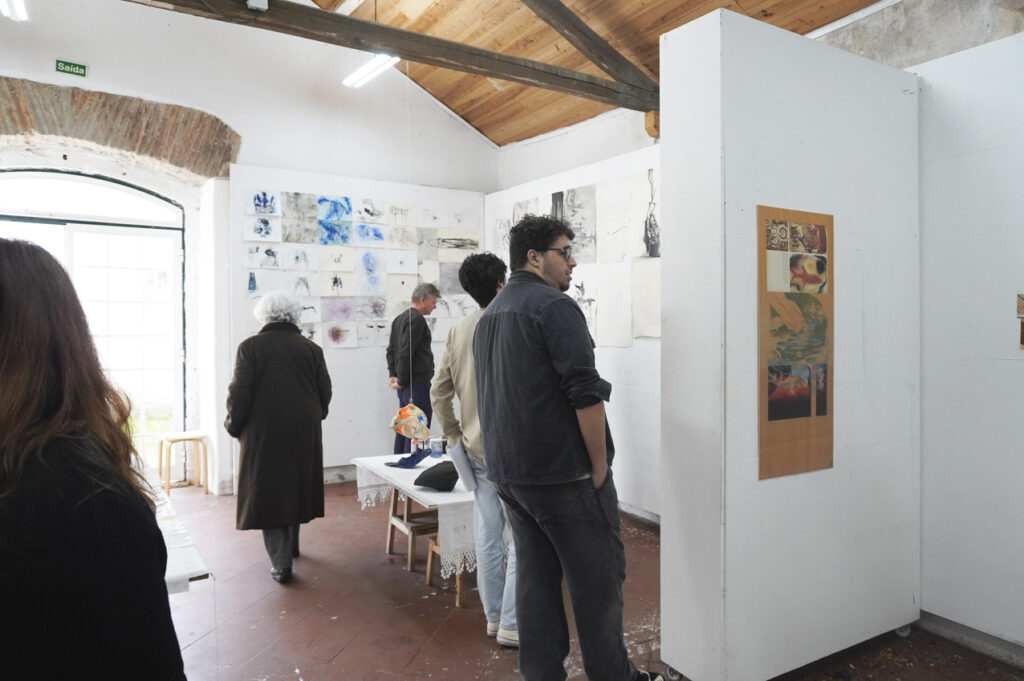
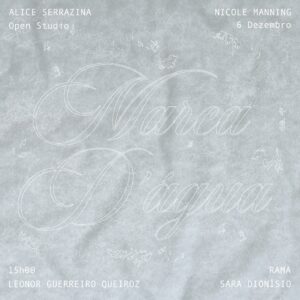
The exhibition “Watermark” is the result of the encounter between Alice Serrazina, Leonor Guerreiro Queiroz and Sara Dionísio – grants holders of the 5th edition of the “Water as a Source of Community” Grant, supported by the Torres Vedras City Council and RAMA – Artistic Residencies to artists based in the Western region of Portugal – and Nicole Manning – an Irish artist developing a research residency at RAMA since the end of September this year.
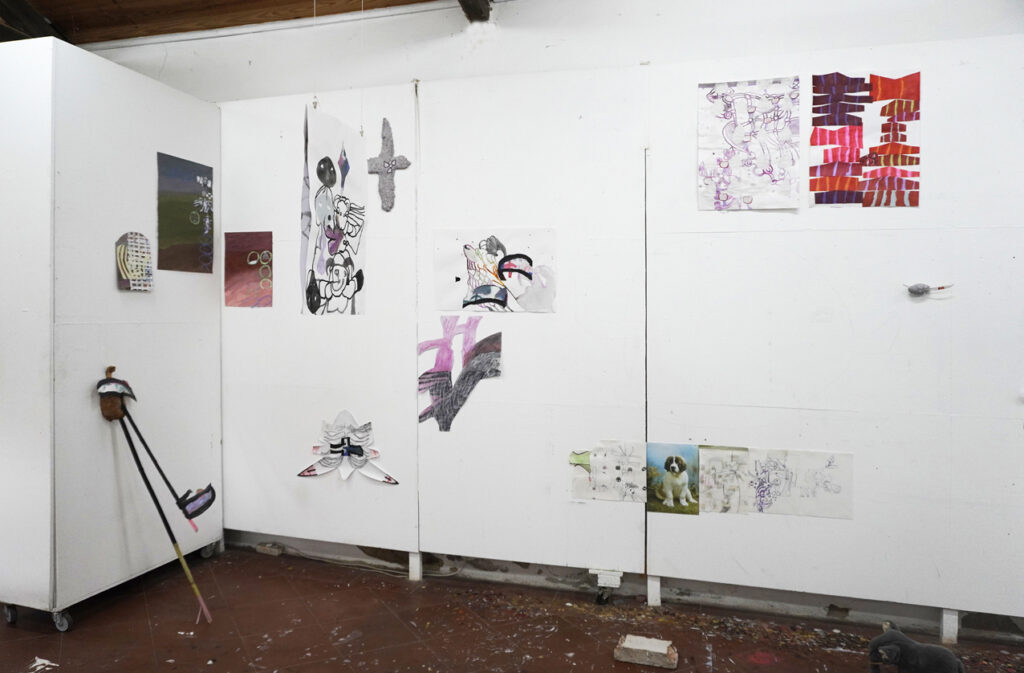
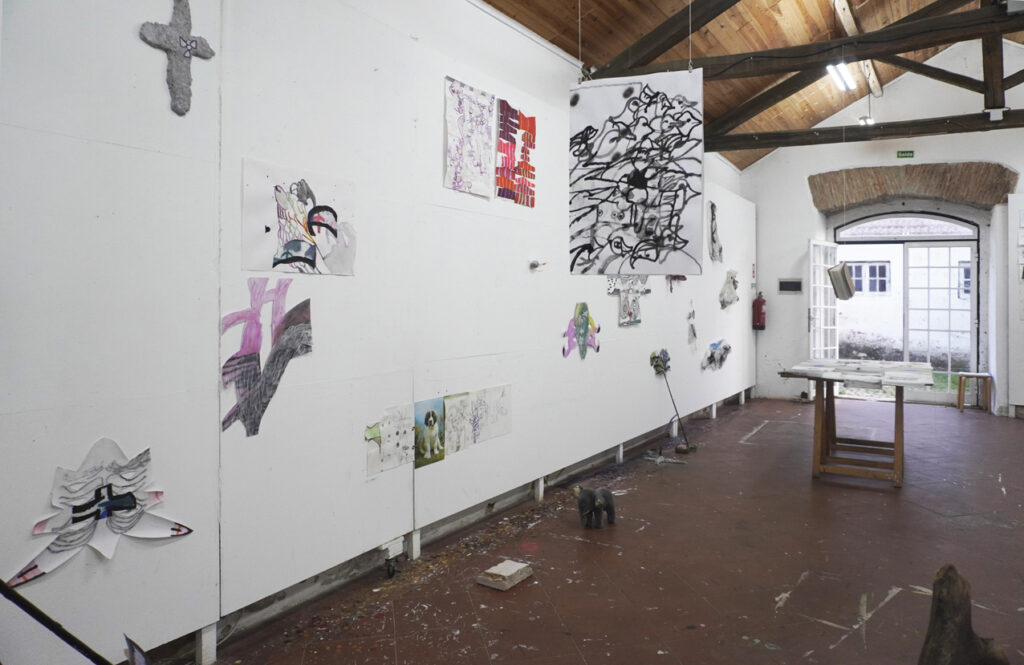
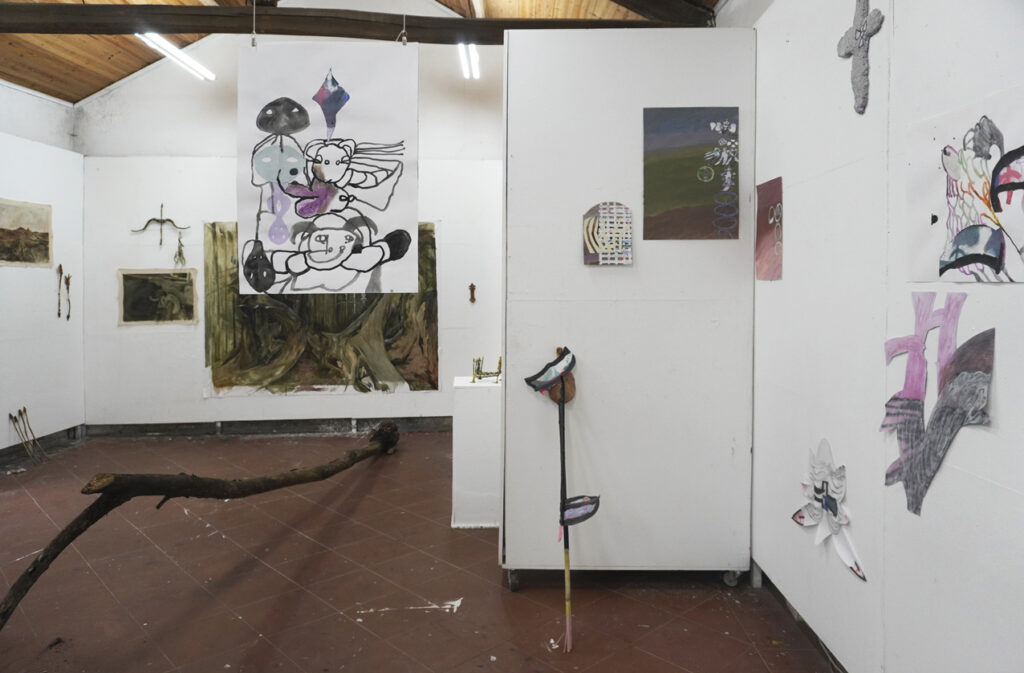
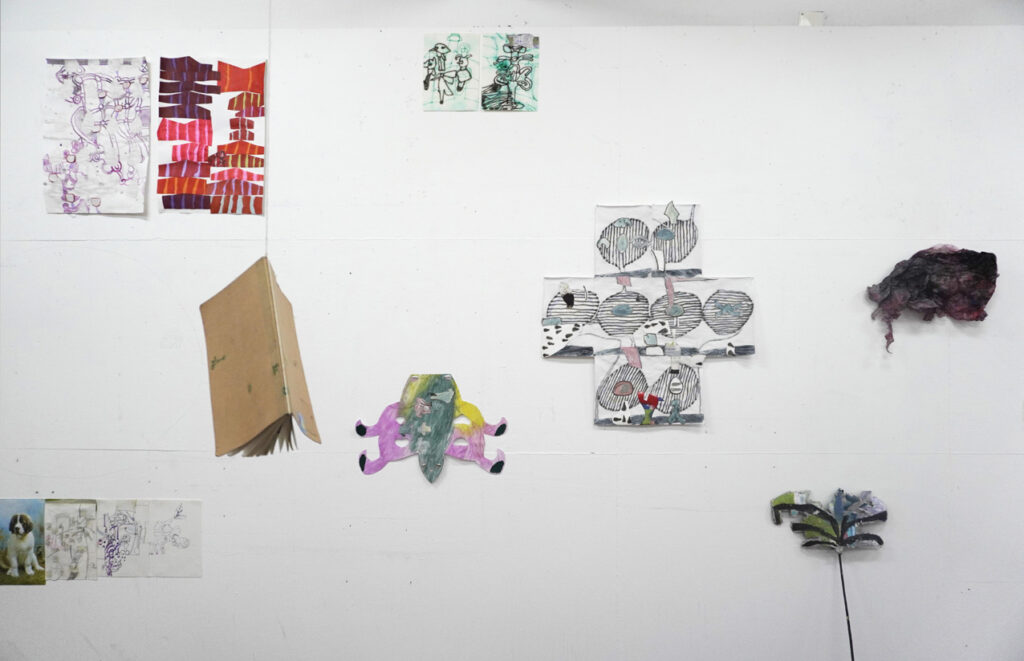
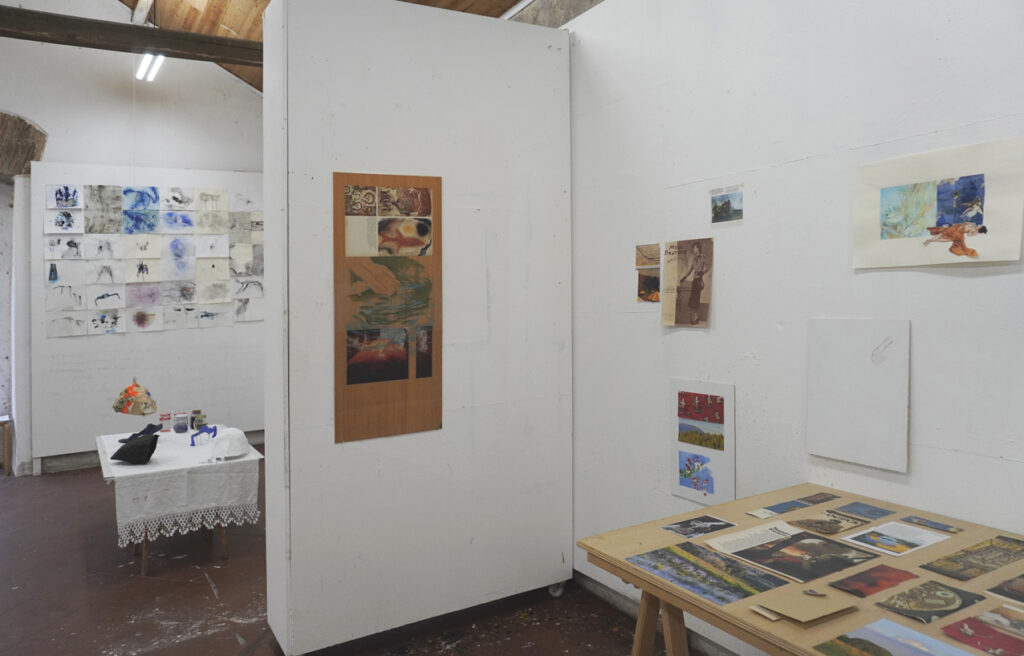
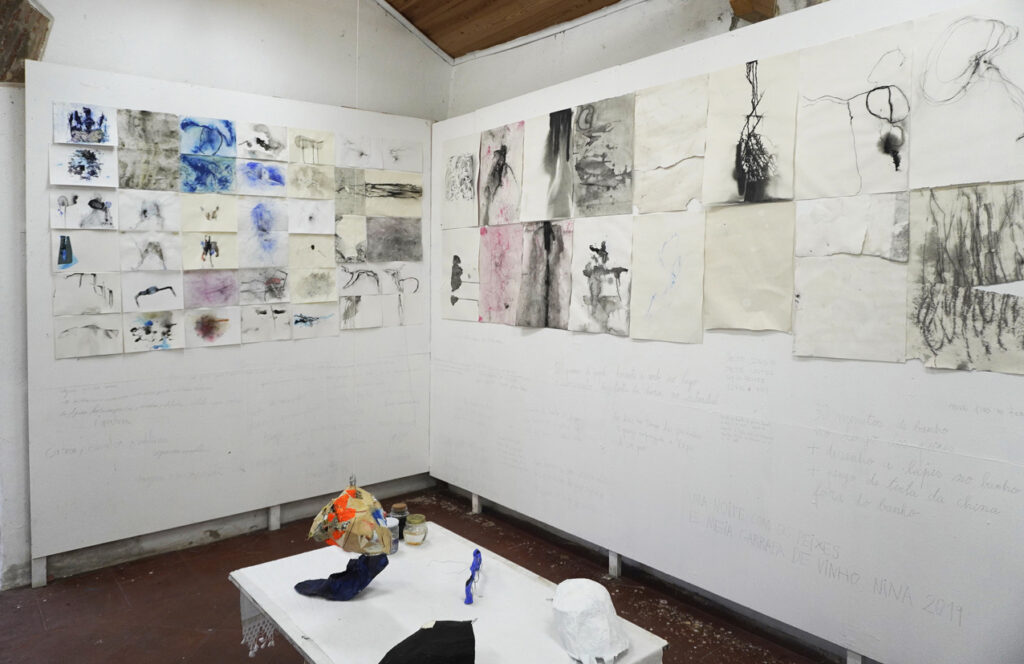
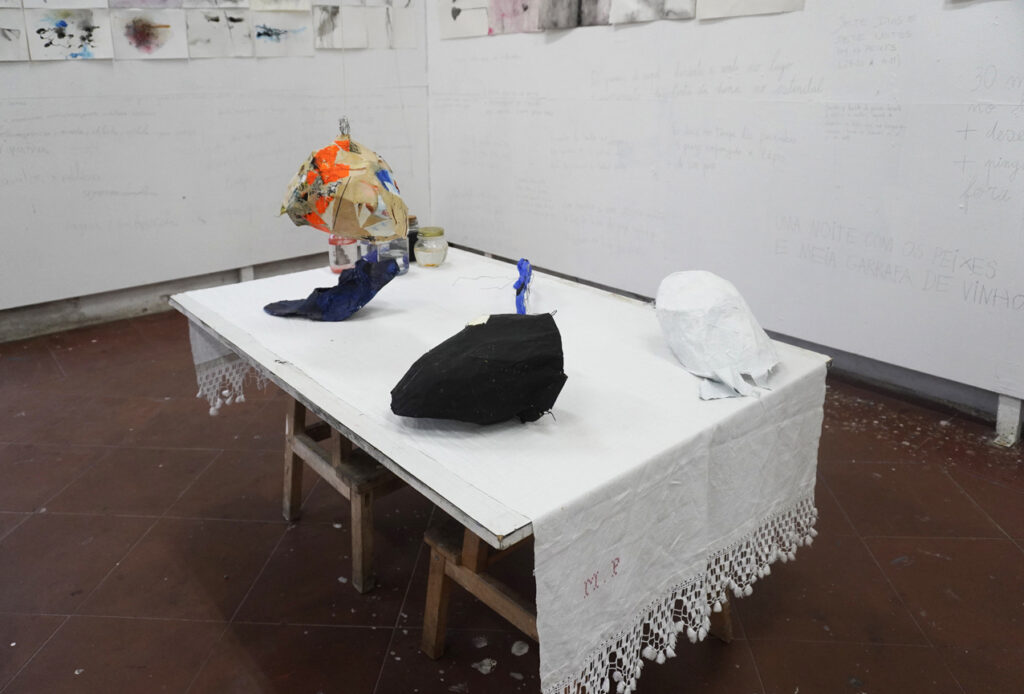
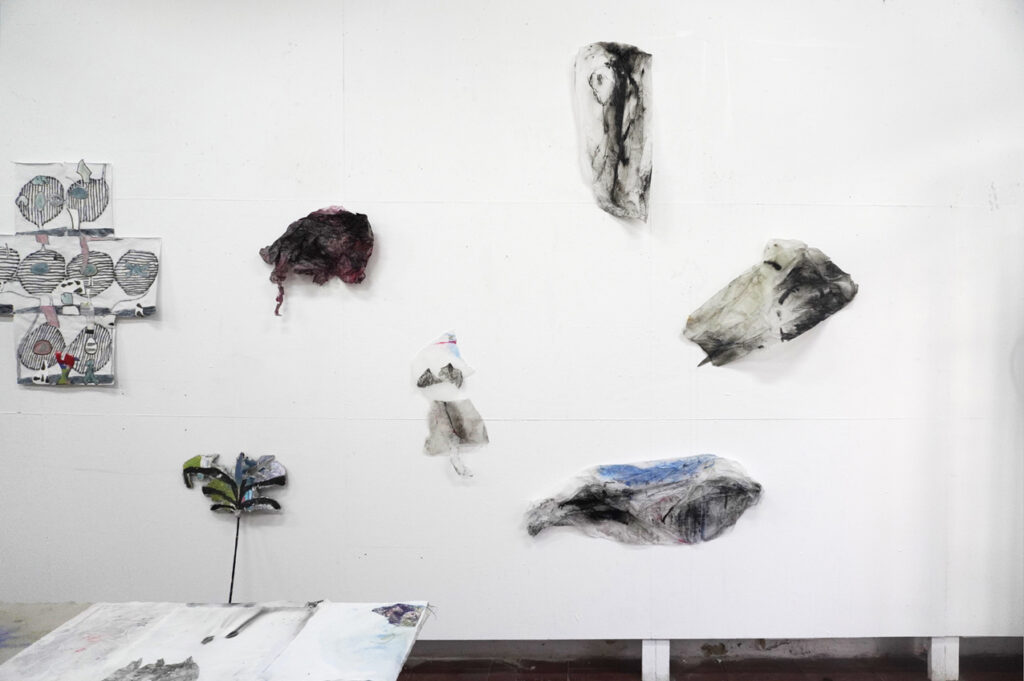
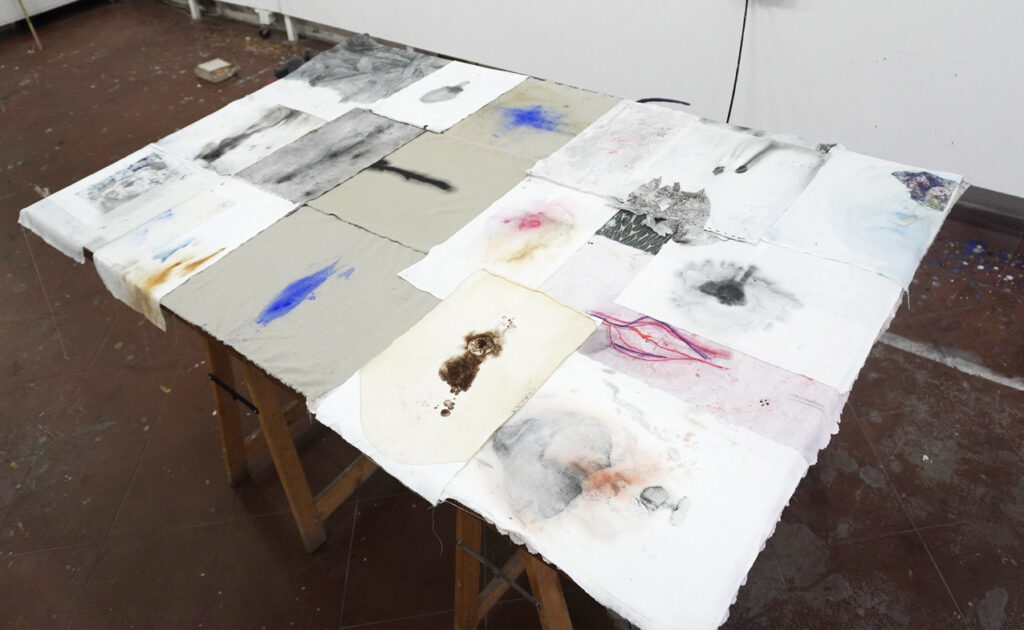
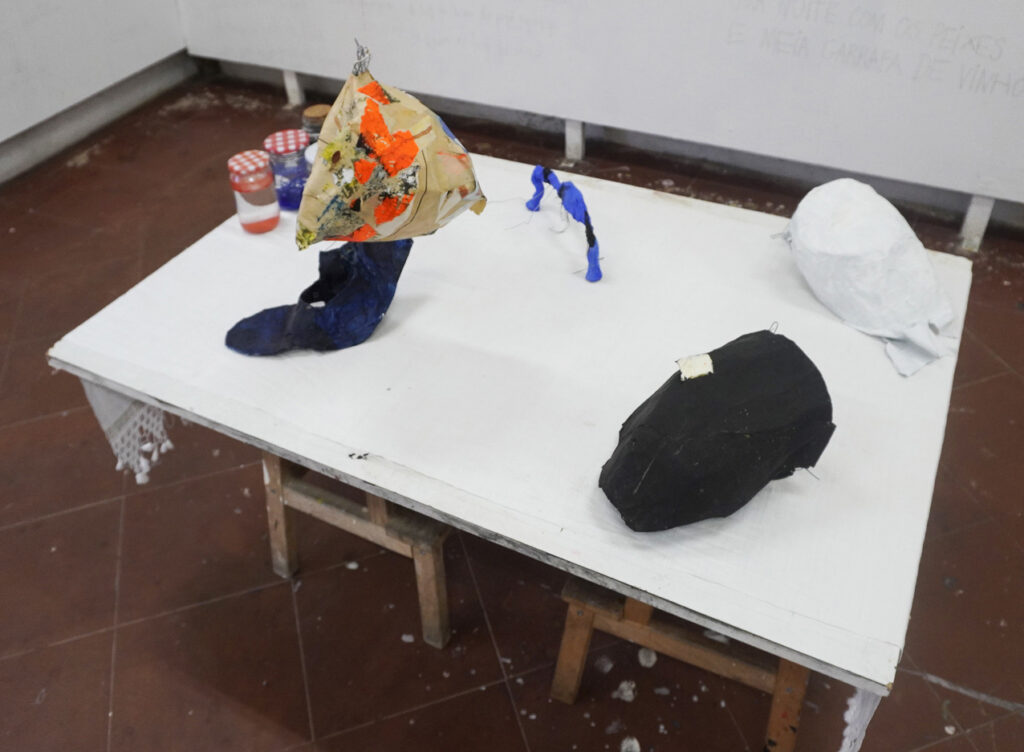
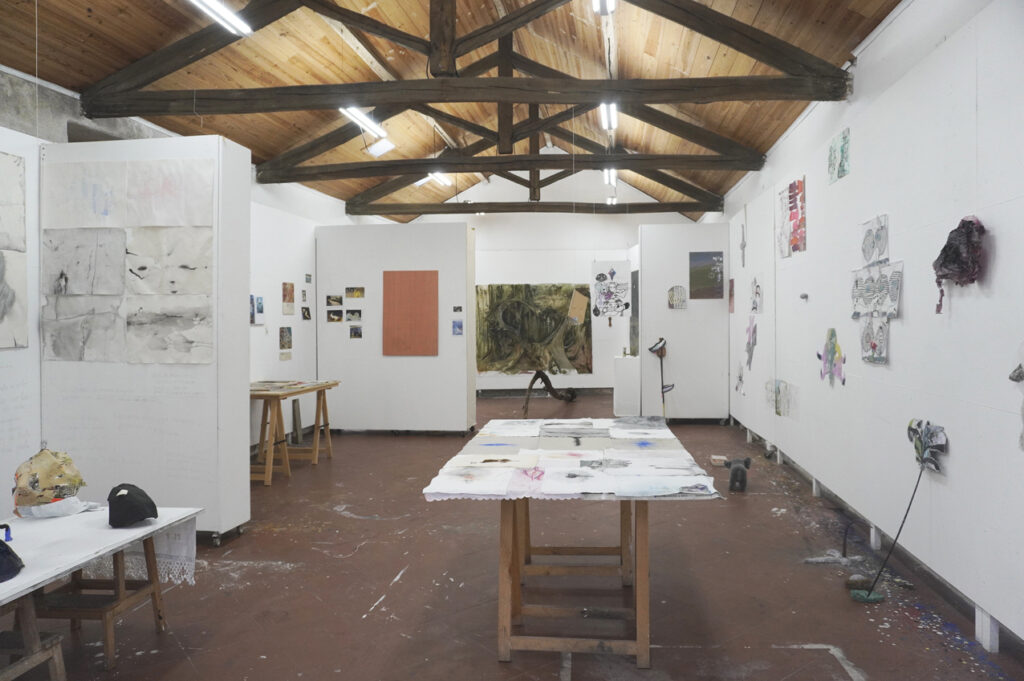
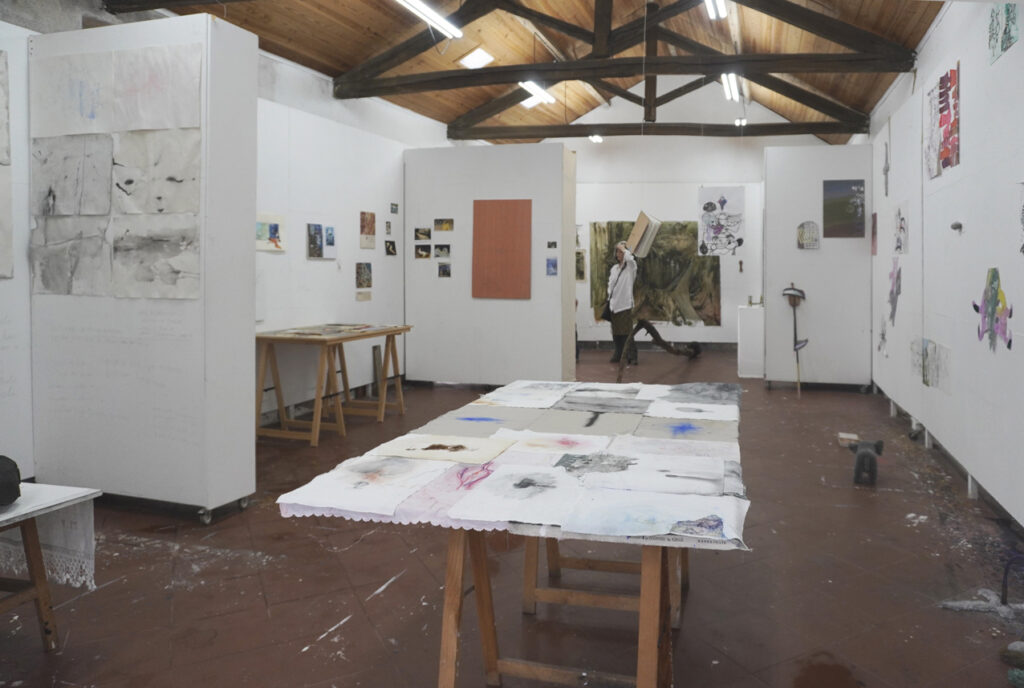
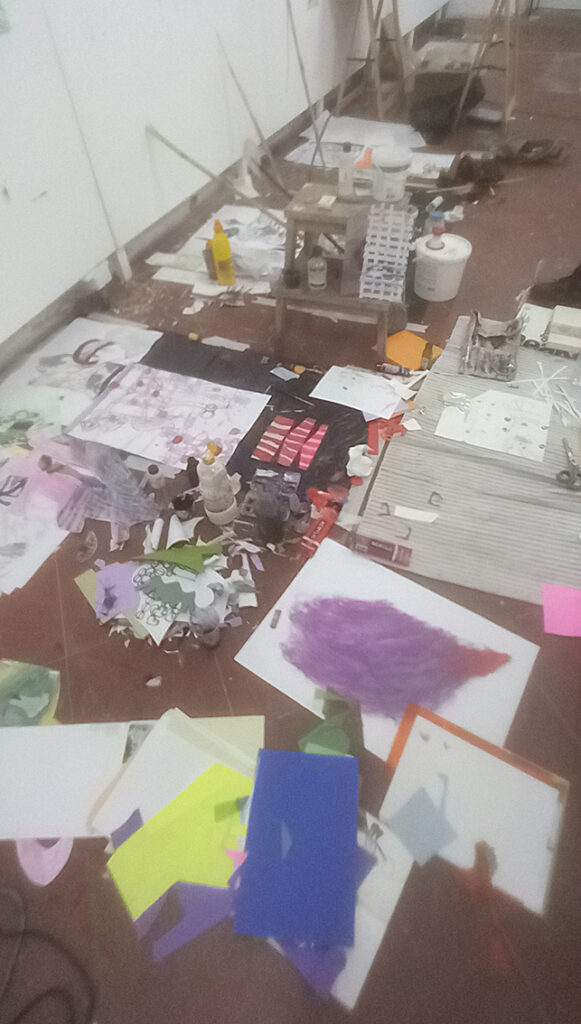
In a moment of pause between processes that are under development (and isn't that almost always the condition of works in the studio context?), the exhibition brings together diverse voices and traits — each with its natural pulse, with its more or less idiosyncratic methodological aspects, with its personal plastic manifestations, with its euphoria, nostalgia, observations, hesitations, and anxieties — united by the fluidity of a common sensibility: vulnerability, memory, poetry, transformation.
In this context, "Watermark" is understood as a metaphor and as a method: that which infiltrates, which leaves traces, which molds without making noise.
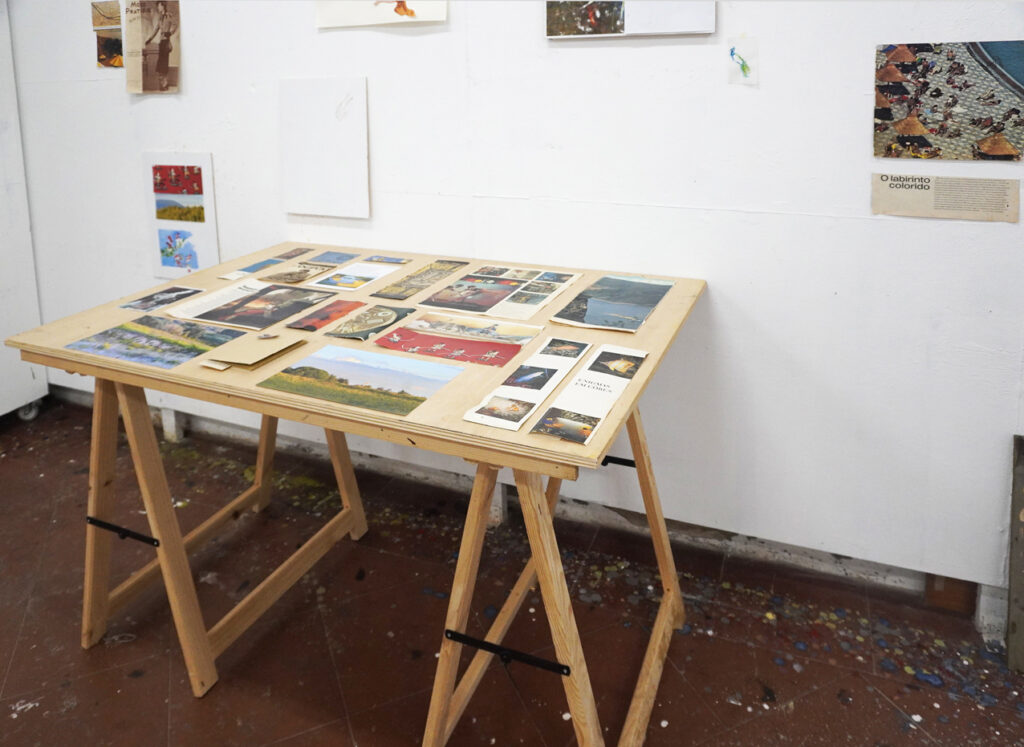
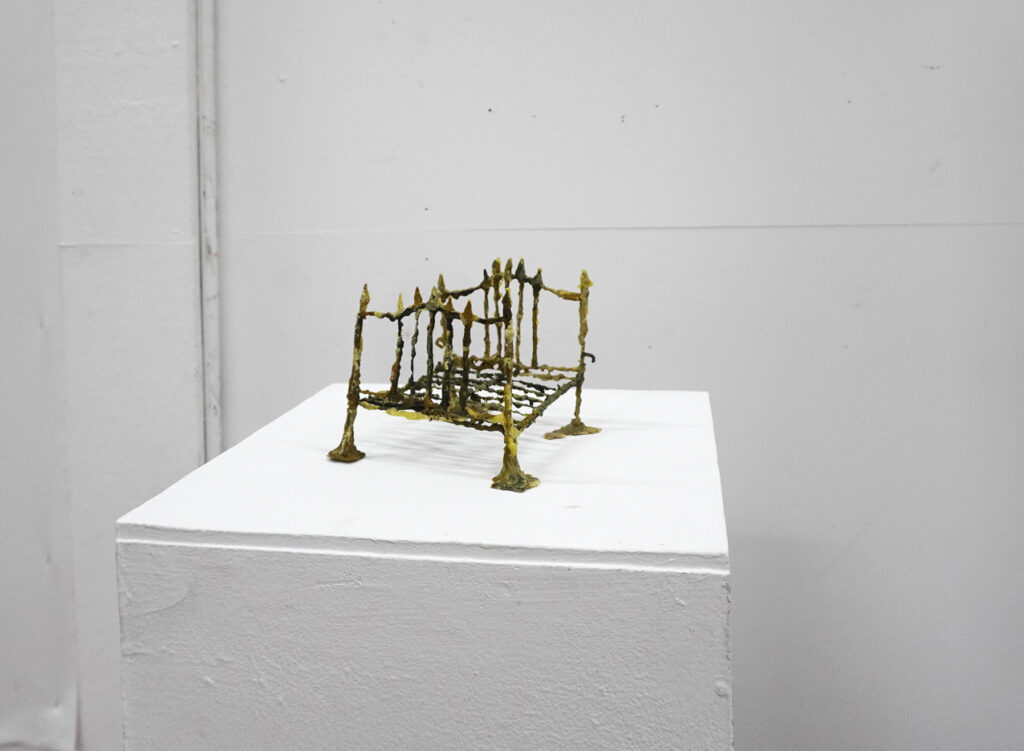
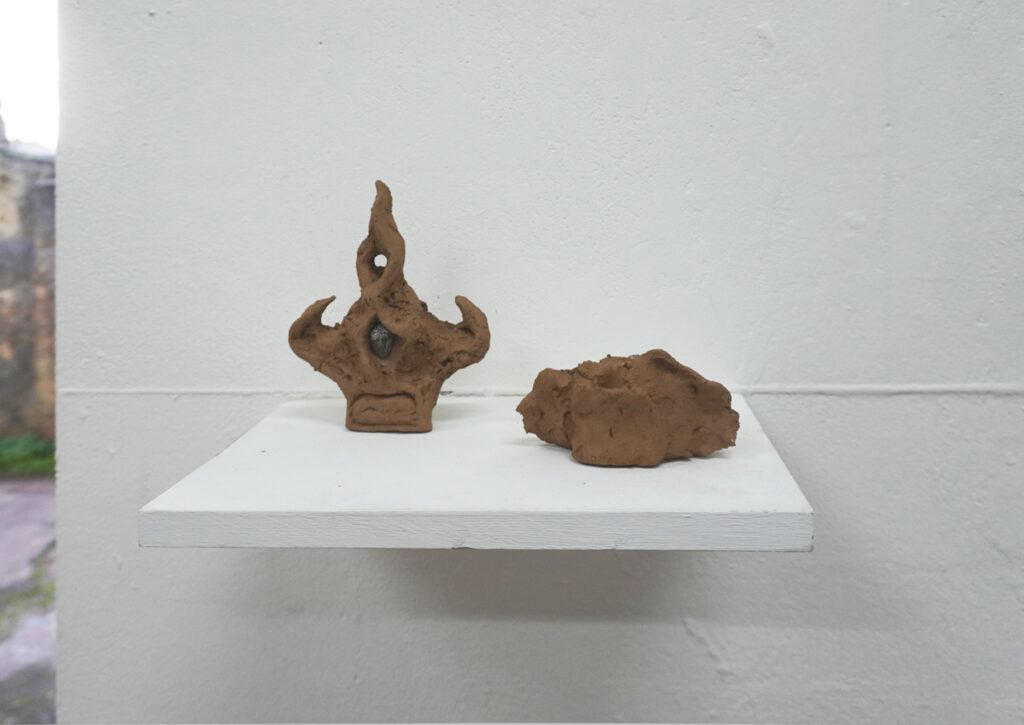
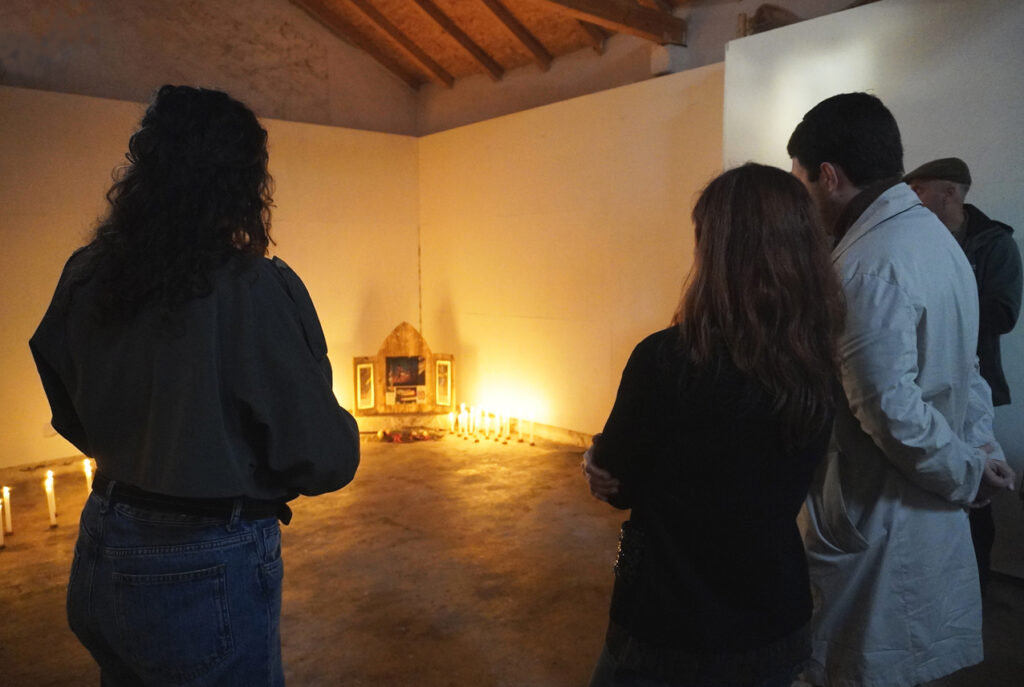
The set of works, experiments, and processes gathered here investigate memory, time, and the fragility of materials, the aspects inherent in the presence of water in its symbolic and ritual dimension, in its social and community dimension, and in its power as a founding element of an imaginary or even dreamlike flow.
Here, water is more than an element: it is thought, it is rhythm, it is shared breath. Its mark is not just a sign, but an encounter: between body and matter, between memory and instant, between what remains and what flows, in an articulation between what is shown and what remains hidden.
The exhibition invites us to listen to the echo of water in silence, but also to allow ourselves to be penetrated by its cold temperature, its vital energy, and to recognize that we are, in many ways, bodies of water — permeable, interdependent, bearers of invisible stories.
Ana Anacleto December 2025
1 Neimanis, Astrida. “Hydrofeminism: Or, On Becoming a Body of Water.” in Undutiful Daughters: Mobilizing Future Concepts, Bodies and Subjectivities in Feminist Thought and Practice, eds. Henriette Gunkel, Chrysanthi Nigianni and Fanny Söderbäck. New York: Palgrave Macmillan, 2012.
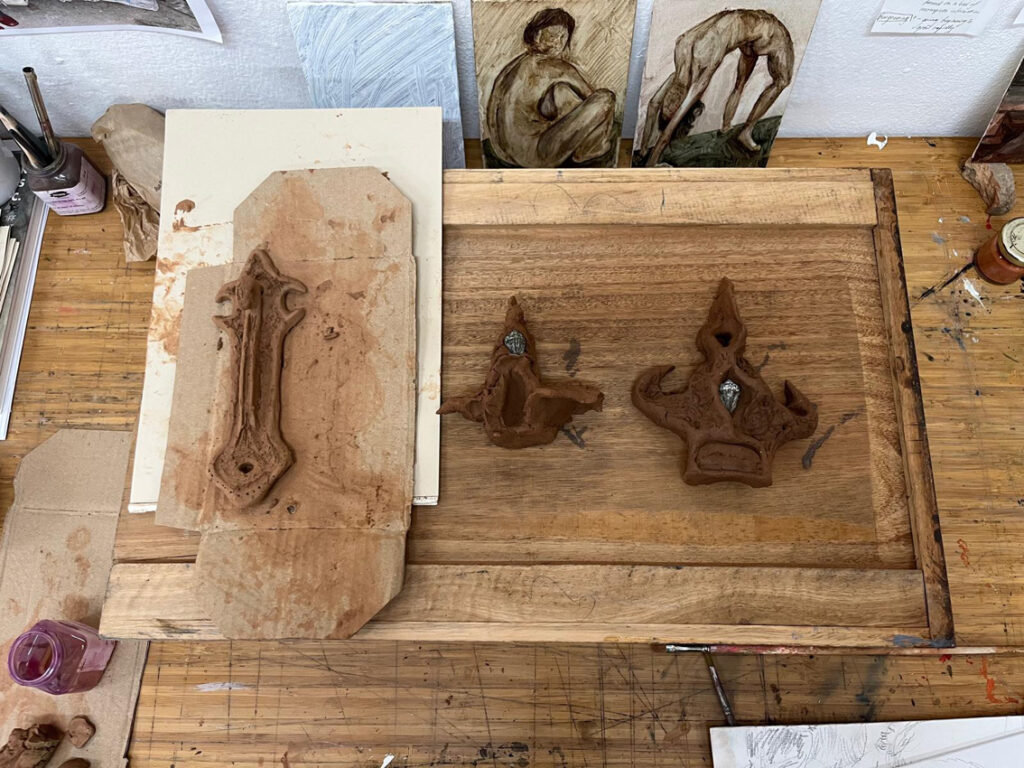
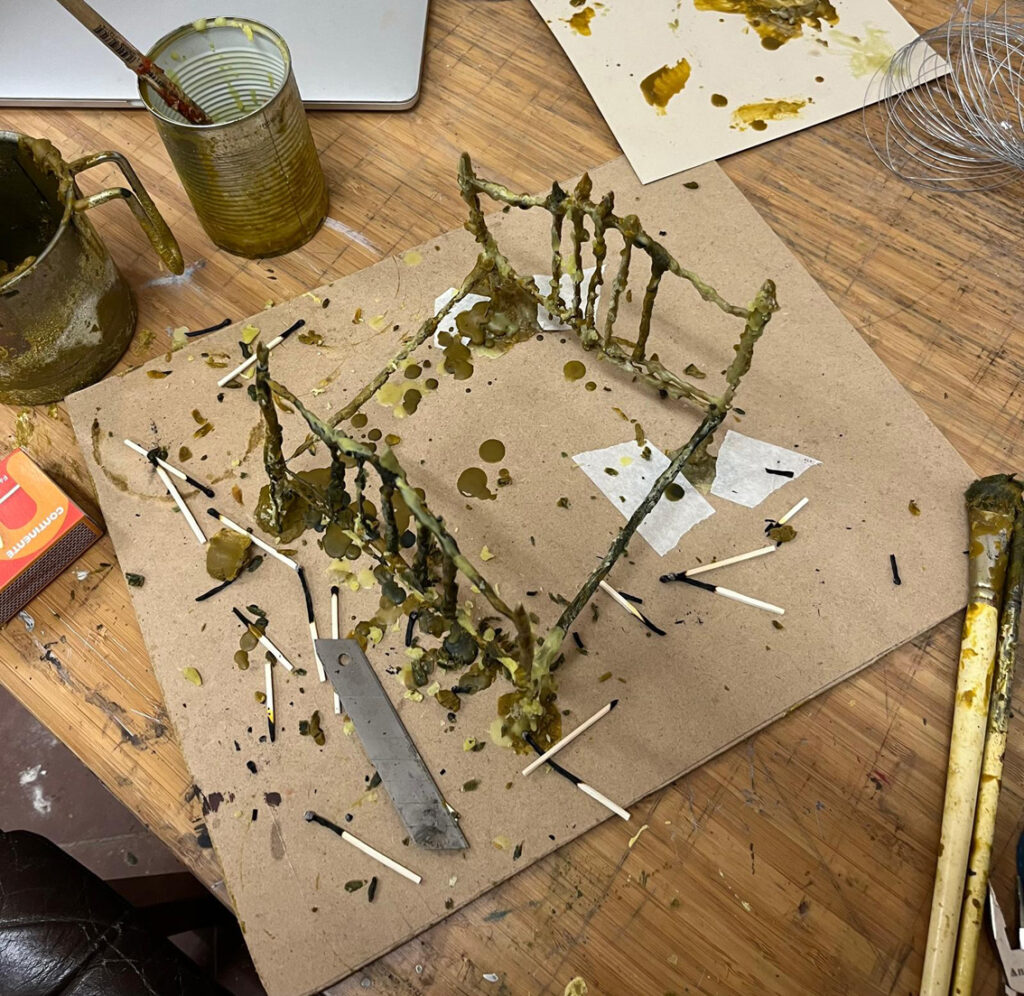
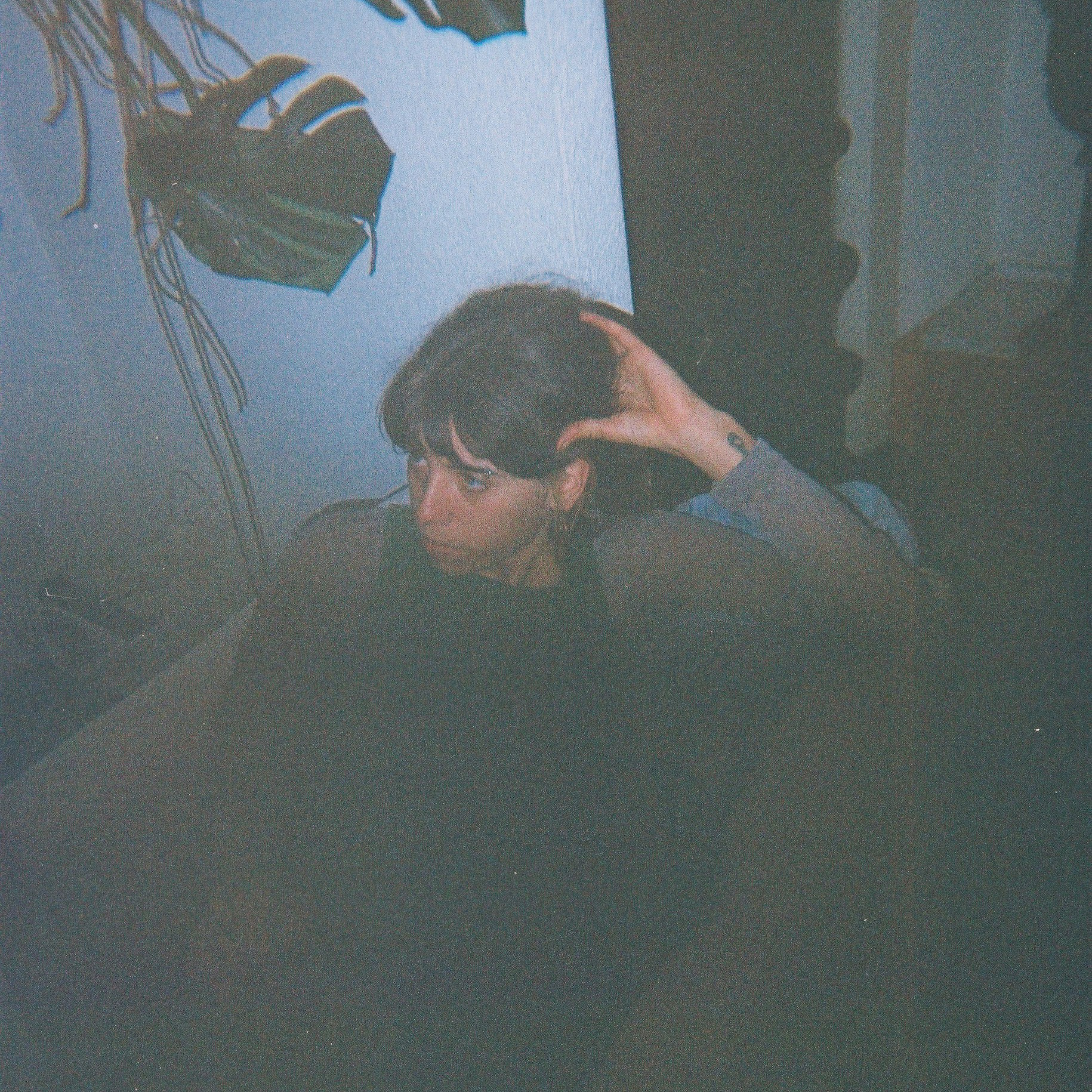
Alice Serrazina
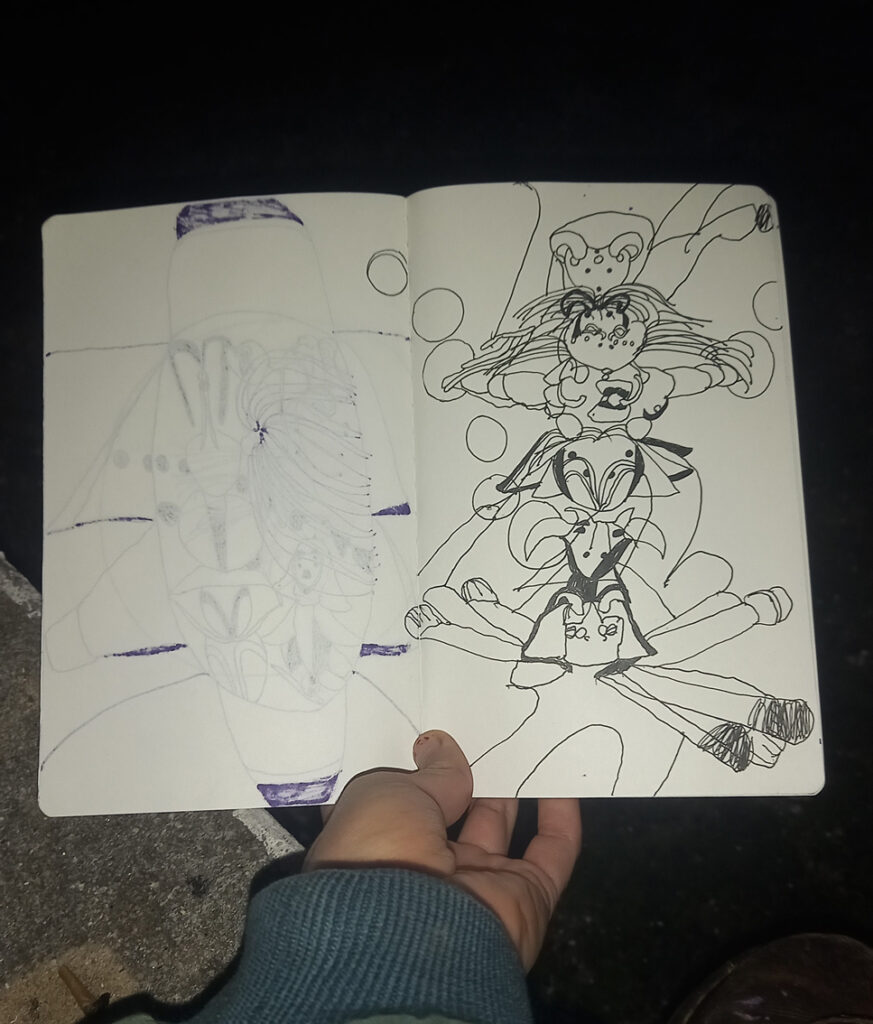
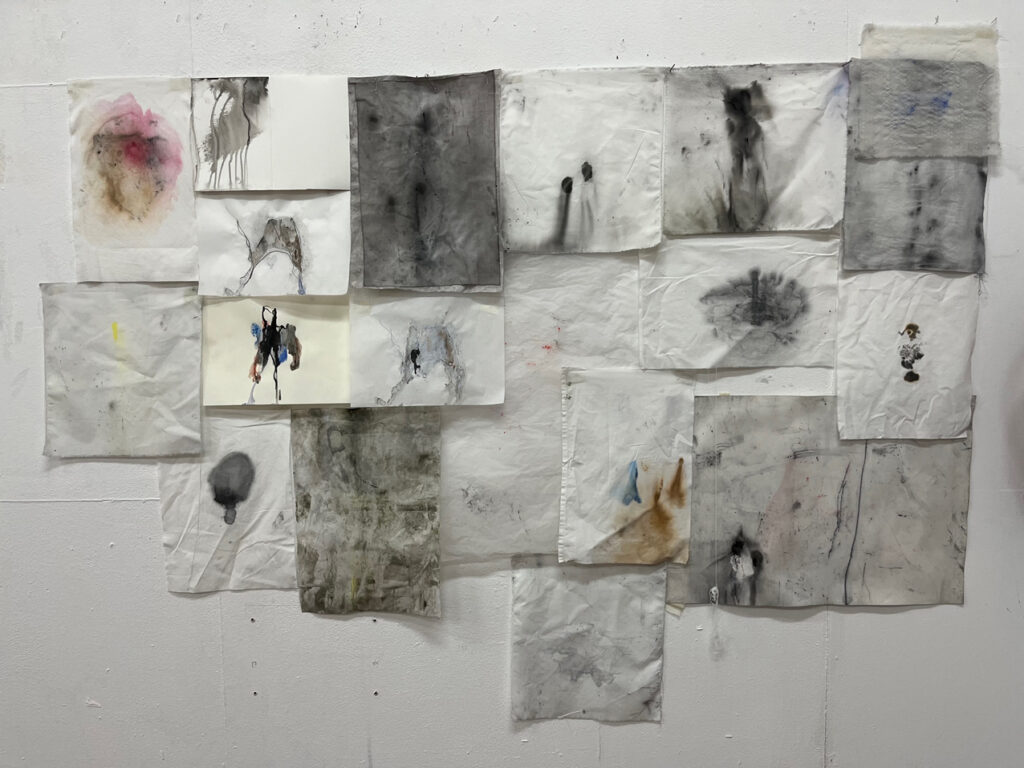
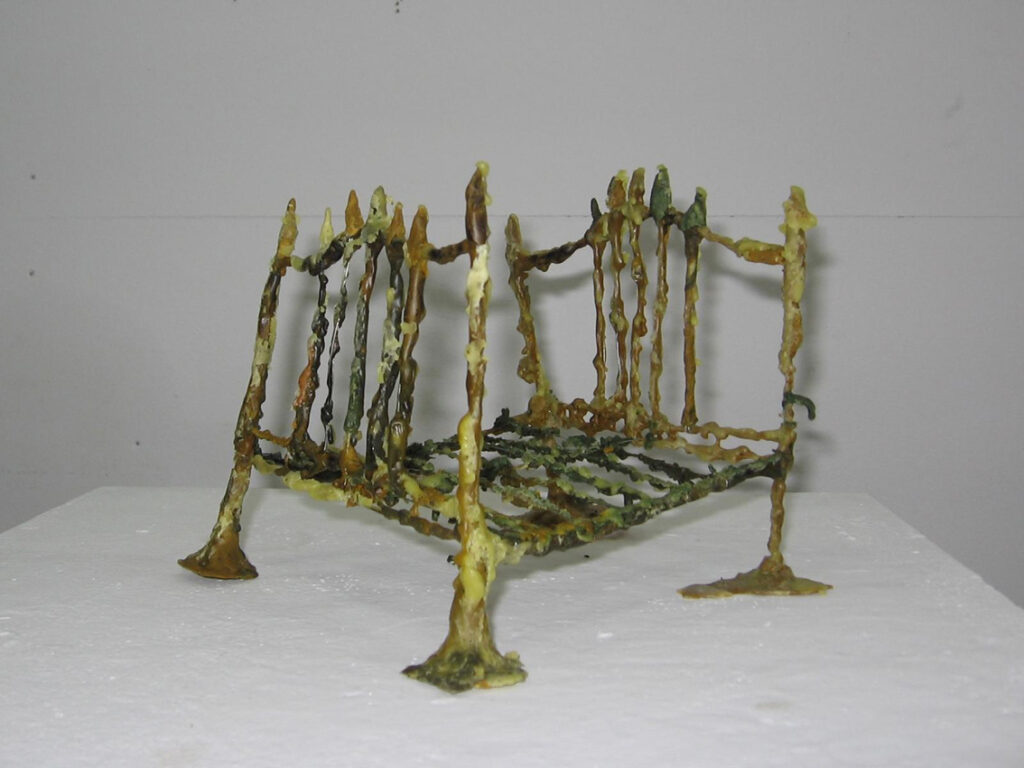
Ongoing experimentation, building hand in hand, looking inward, drawing the shadows. Rock, paper, scissors — and now I make a wish. I make another drawing. Empty wall, open window. Tracing the path of the water, wetting my head at the spring. A continuous making, following the phases of the moon. Where do we chase away the mermaids and their songs? Symbol, object, image, soundscape. Climbing the apple tree and from up high — a butterfly performs a magic trick. How many ways are there to tell stories without words?
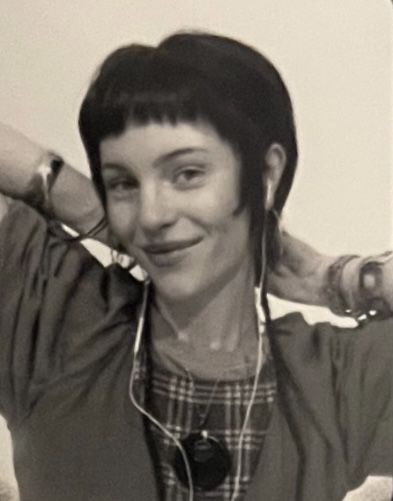
Nicole Manning
During my time at RAMA, I am developing “Scraping for Answers”, a series of paintings exploring chronic pain as a manifestation of trauma and psychological distress. Building on my previous work about PTSD and the gut-brain connection, I’m expanding my research to address gender bias and misdiagnosis in women’s healthcare. This is my first time creating such intimate work outside a city environment, and is integral to the emotion within the series. Working in RAMA’s rural setting, I aim to integrate natural pigments and local materials into the paintings, both to ground the work in the surrounding landscape, and to emphasise the importance of nature when it comes to healing the body.
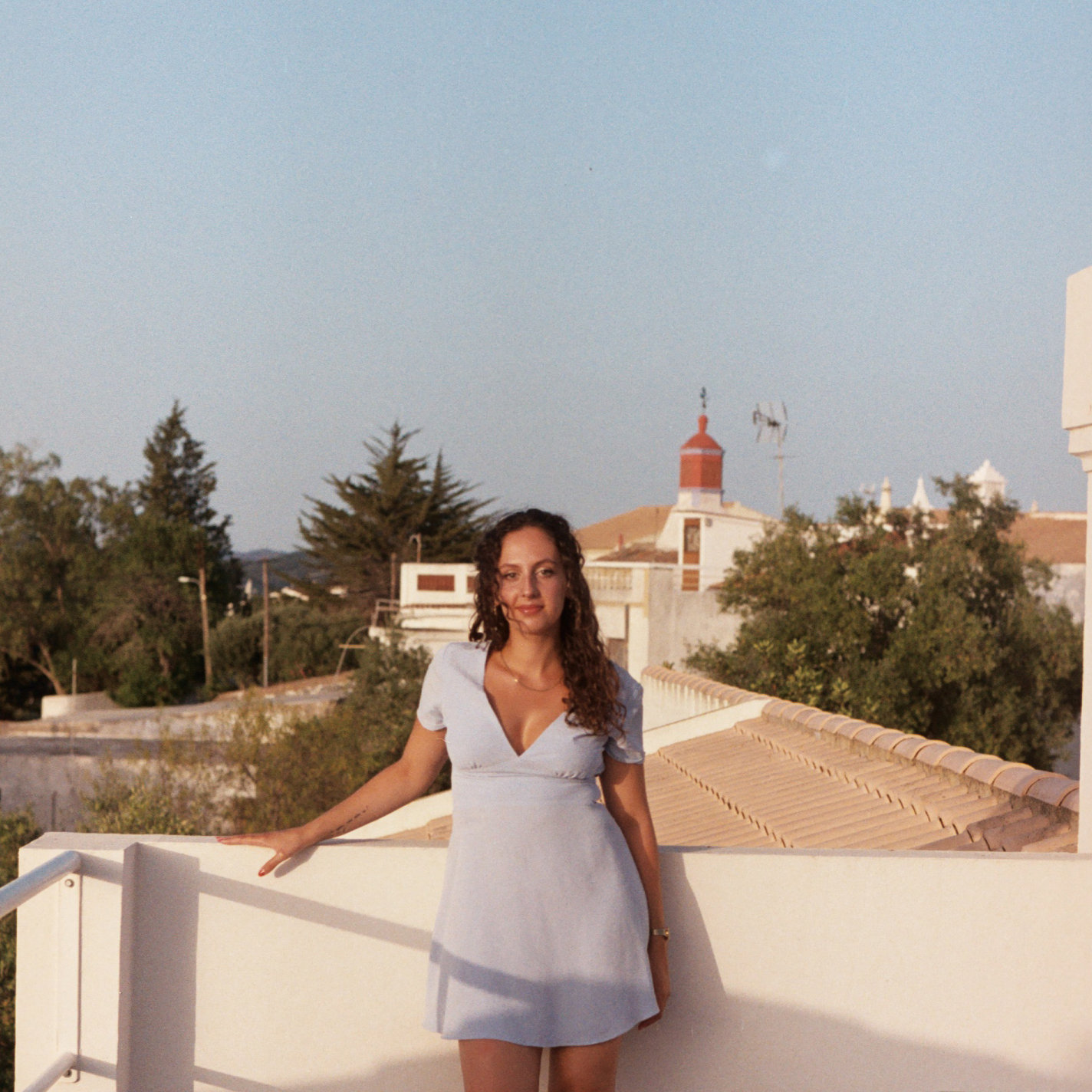
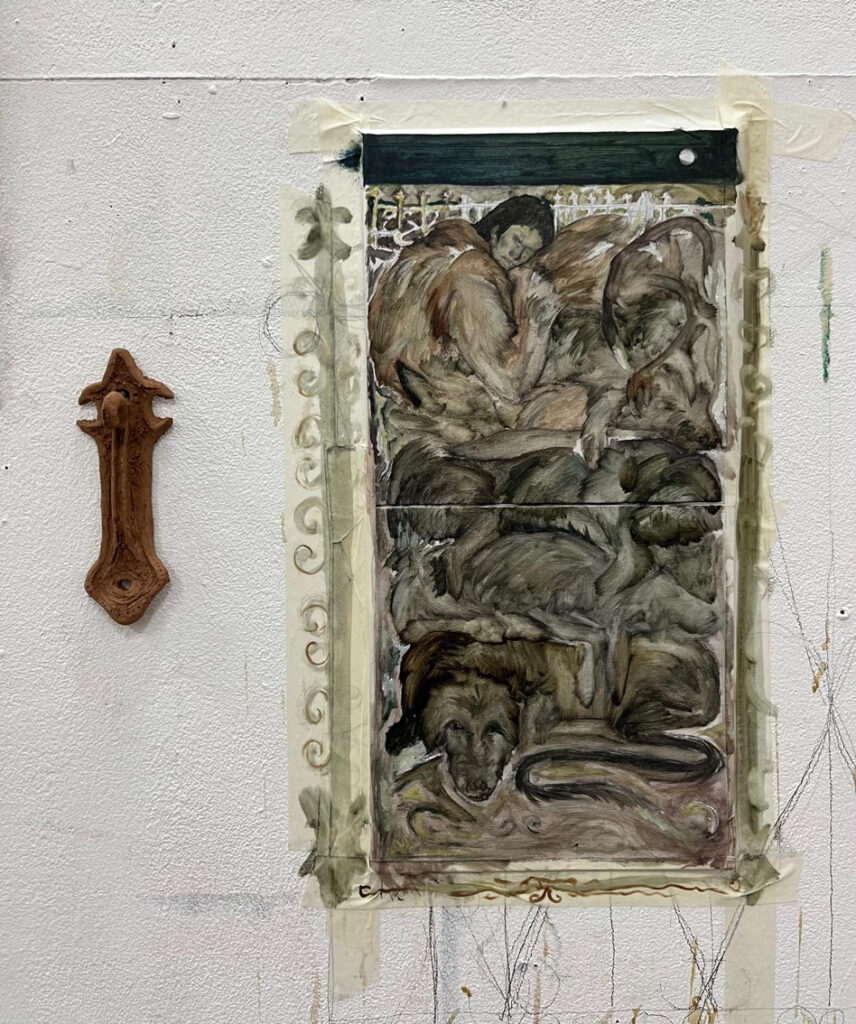
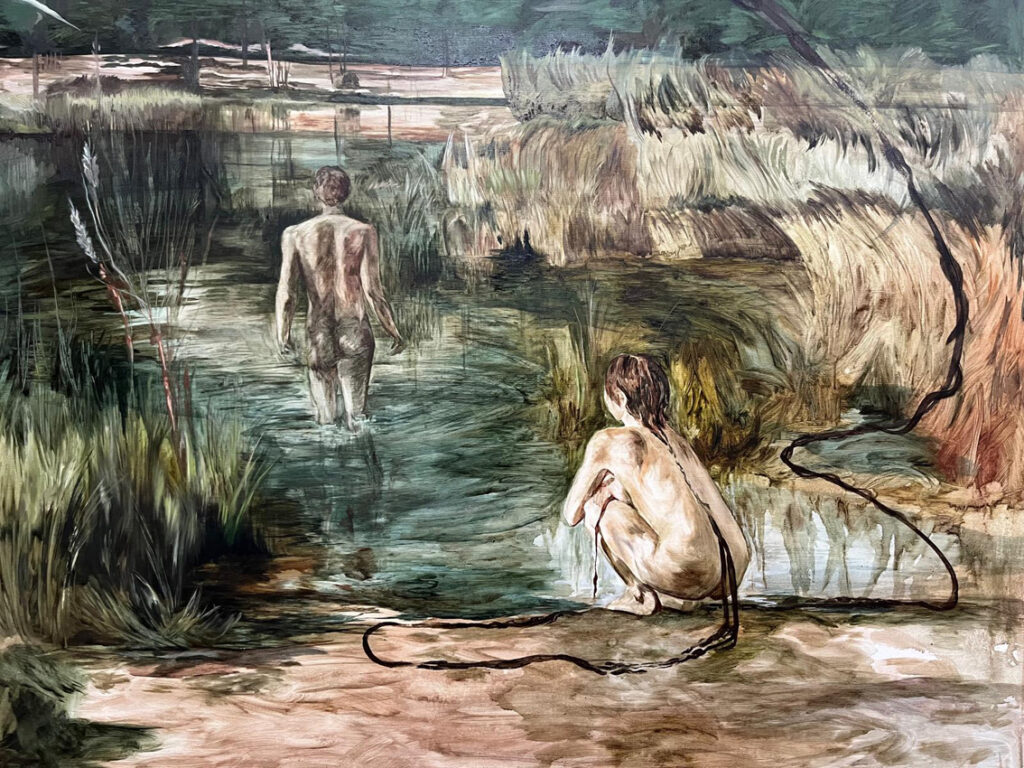
Leonor Guerreiro Queiroz
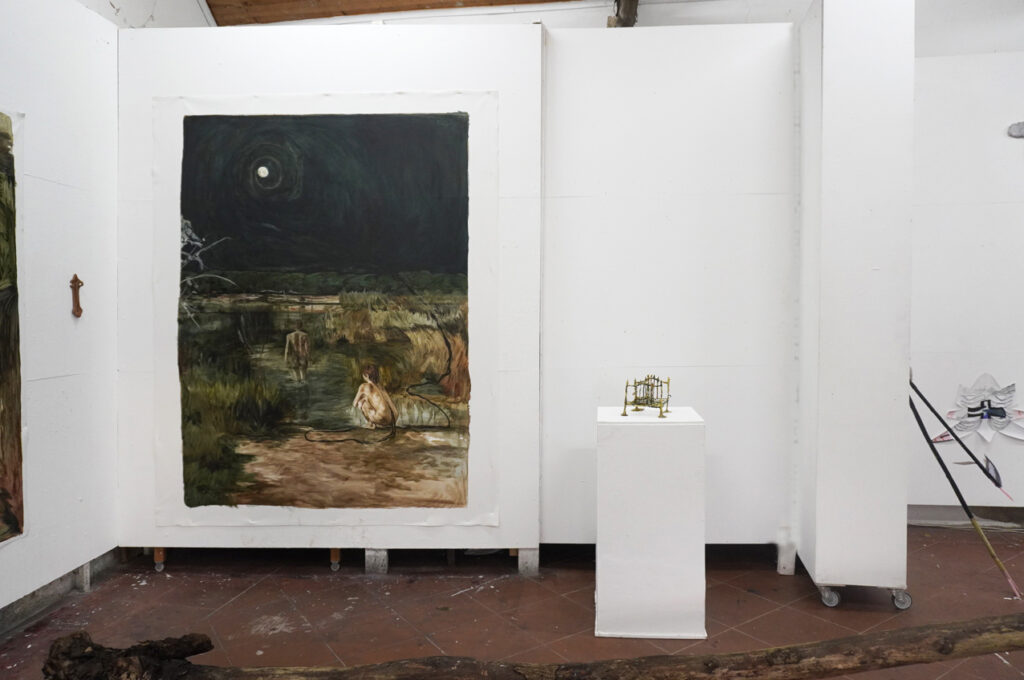
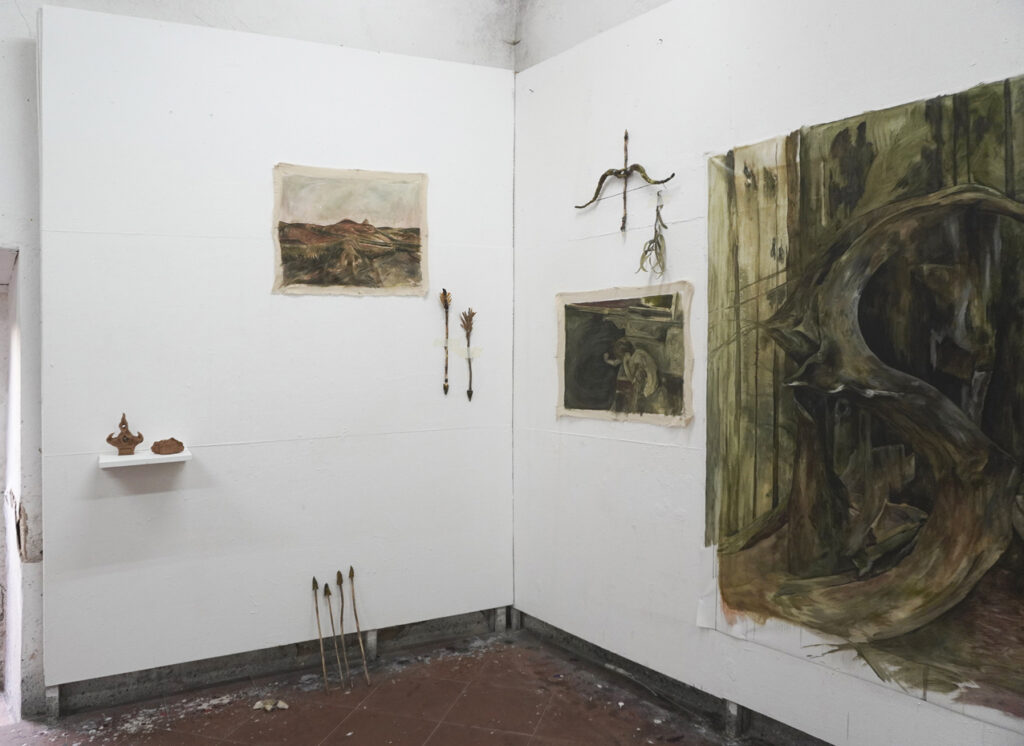
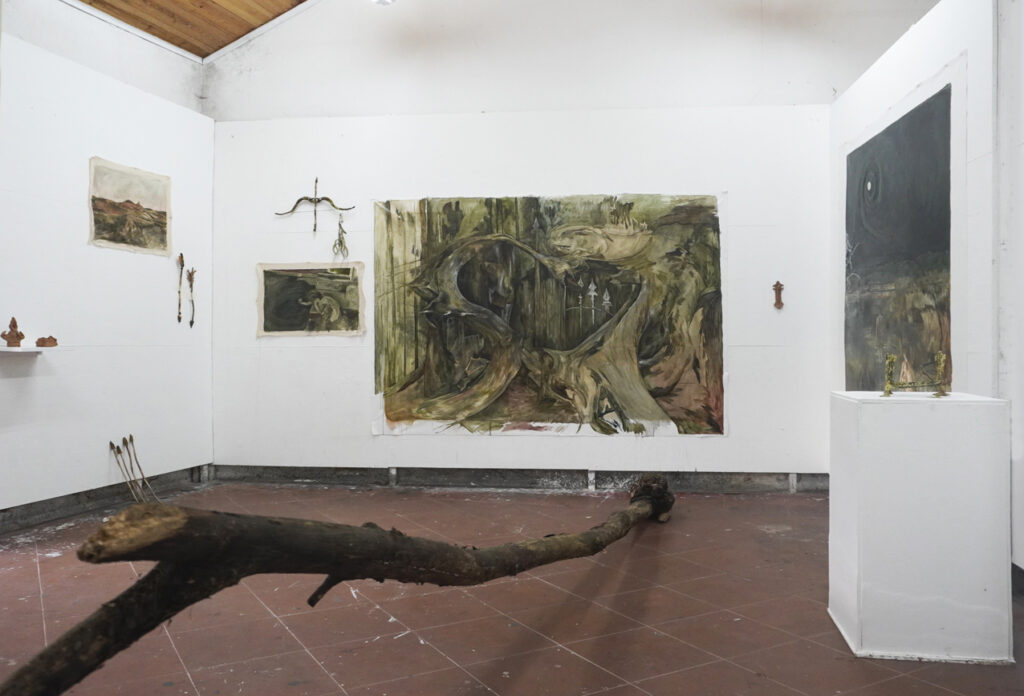
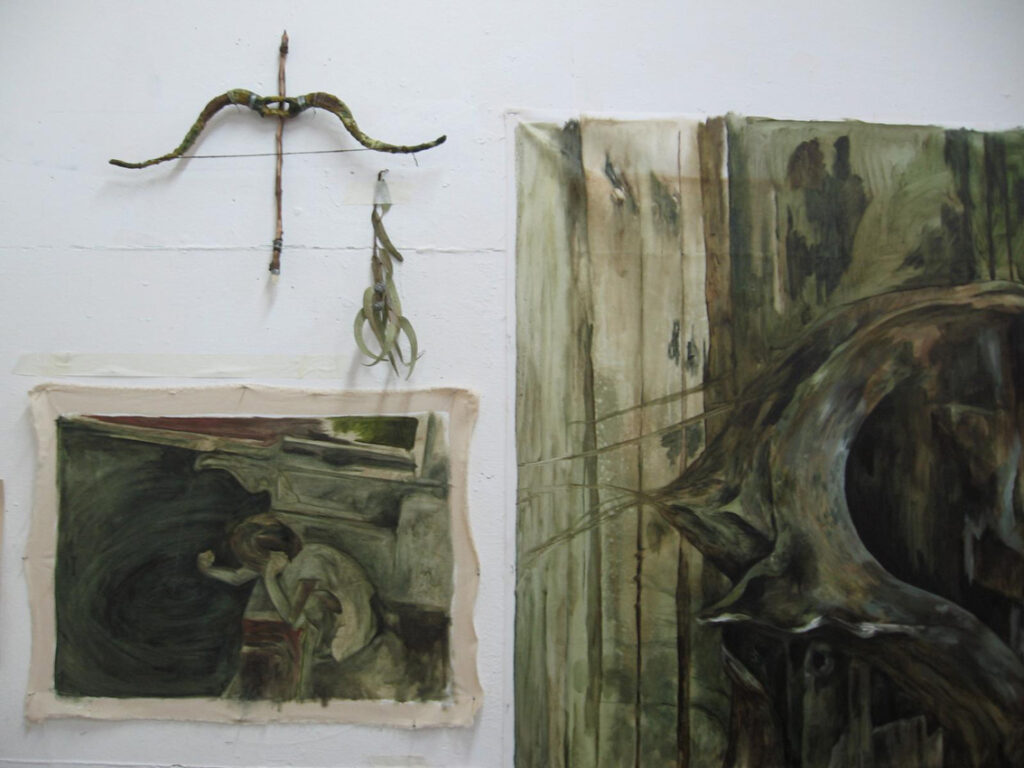
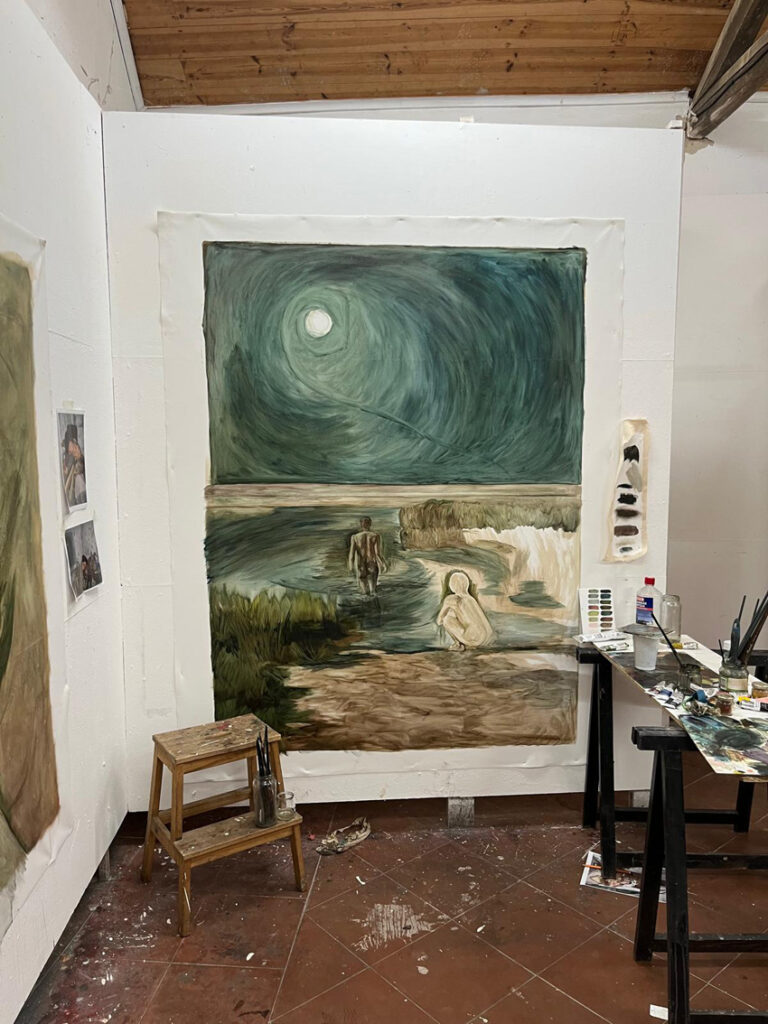
The core of my work lies in the figure and image of the female body — a body that has historically oscillated between an object of desire and of disdain, associated both with the sacred and with sin. This ambivalence is mirrored in the very nature of water — just as my images explore the play between concealment and revelation (a game of hide-and-seek transposed onto the pictorial plane), water too, whether in wells, mines, or washhouses, reveals itself as an essential element of community life, though its value often remains silent in everyday life.
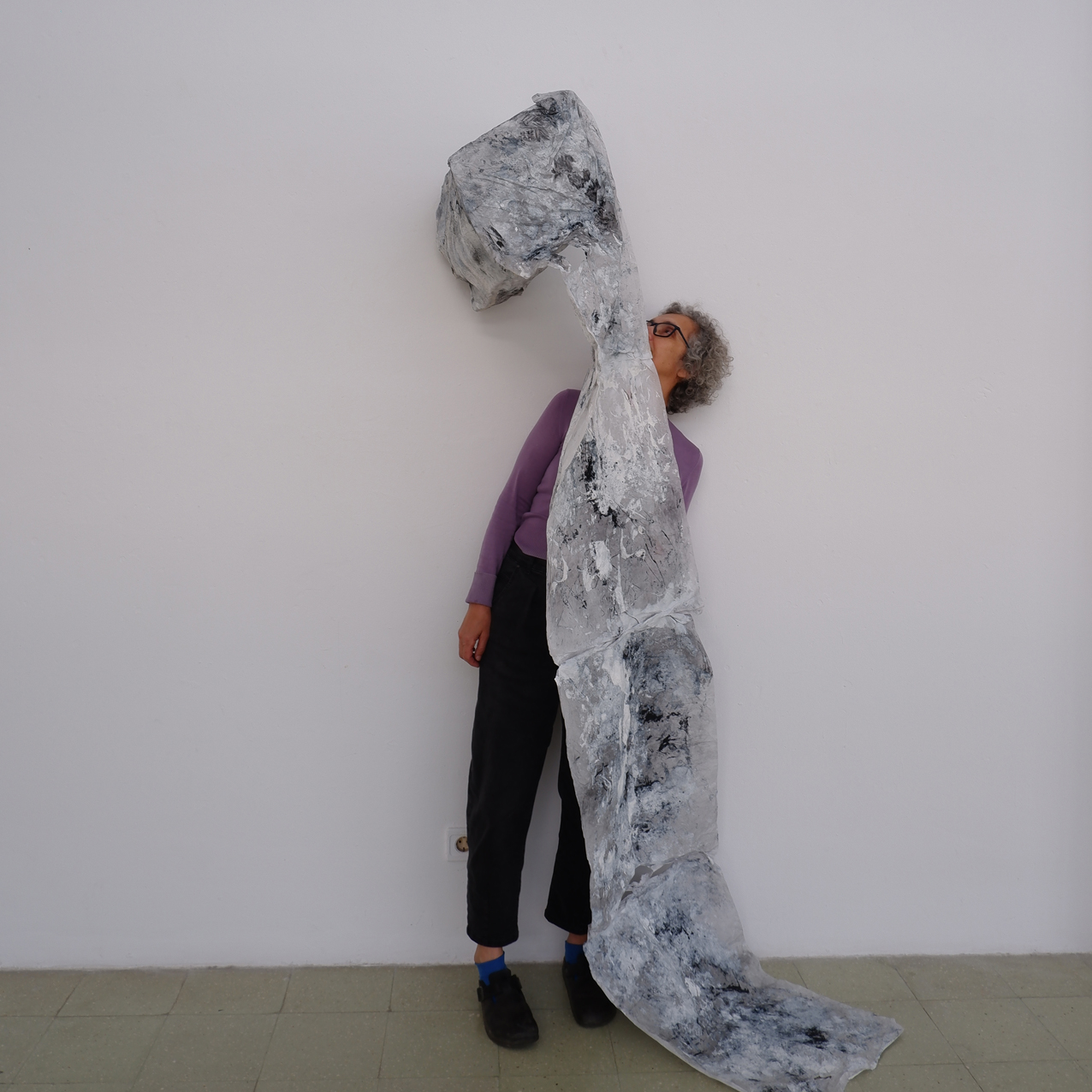
Sara Dionísio
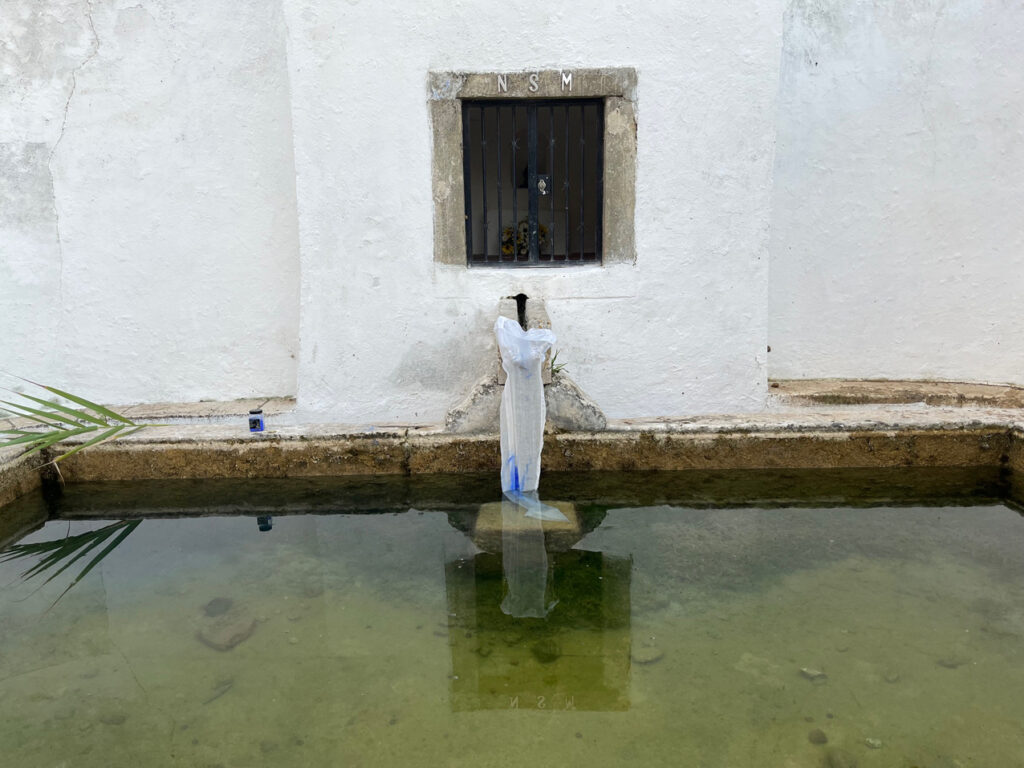
Project: filmed recordings that will give rise to a kind of map of waters, where liquid sources are inscribed — the birthplaces of water and the traces or marks it leaves at the moment it emerges. On this map, one may also record the paths, both real and imagined, that water traces over time. To listen to and observe water at the moment of its rebirth, capturing a part of its life cycle, a fragment of its story, can also be a way of speaking about the importance of water and its preservation in our society. It is, likewise, a way of caring for this vital living entity.